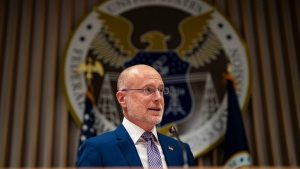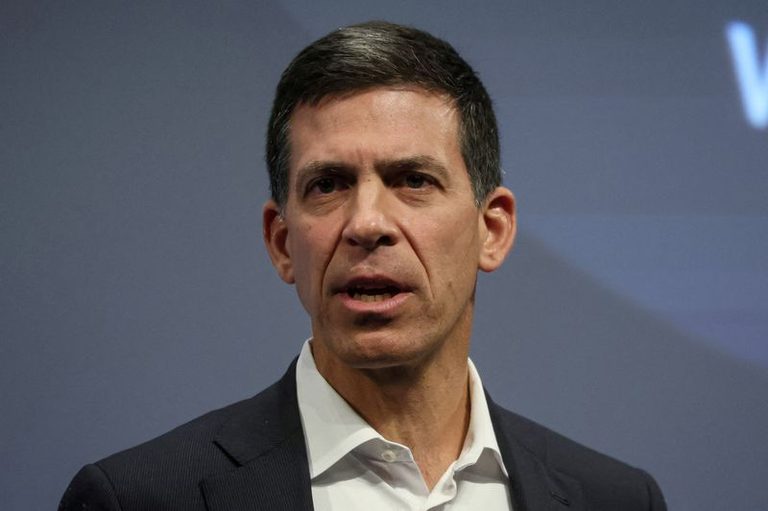
Goldman Sachs Group announced that it is preparing a clear succession roadmap that would elevate President and Chief Operating Officer John Waldrow to the chief executive role, potentially as early as 2027 or 2028. The move underscores the firm’s confidence in Waldrow’s long‑standing partnership with current CEO David Solomon and his track record of operational leadership.
Early life and education
John Waldrow, 57, grew up in Cleveland, Ohio, before his family moved to Philadelphia when he was 15. He earned a Bachelor of Arts degree from Middlebury College in Vermont. Waldrow often credits his youth sports experiences with teaching him discipline, the value of constructive feedback, and a methodical approach to improving weaknesses.
Career at Goldman Sachs
Waldrow’s Wall Street career began at Bear Stearns, mirroring Solomon’s early path. He joined Goldman Sachs in 2000, roughly a year after Solomon’s arrival. In a recent interview, Waldrow disclosed that Goldman initially rejected him after a financial‑modelling test highlighted gaps in his mathematics and accounting skills. He persevered, advancing through the firm’s investment‑banking divisions.
From 2000 to 2007, Waldrow served as co‑head of leveraged finance and held several senior positions. He then became global co‑head of the financial sponsors group from 2007 to 2009, followed by a stint as global head of investment banking services and client coverage from 2009 to 2014. In October 2014, he was promoted to co‑head of the investment banking division, a role he held until October 2018.
Rise to president and COO
When Solomon was named CEO in October 2018, Waldrow was elevated to president and chief operating officer. In January 2025, both executives received $80 million retention bonuses in restricted stock, reflecting the firm’s commitment to its leadership team. The following month, Waldrow joined Goldman’s board of directors, a step analysts view as solidifying his status as the heir apparent.
Industry observers note that Waldrow is expected to continue the strategic direction set under Solomon rather than pursue a radical shift. His leadership style is described as disciplined and highly organized; he famously color‑codes his calendar to separate business from family time, a habit he discussed with Brigitte Madrian, dean of the BYU Marriott School of Business.
Key initiatives
As COO, Waldrow has overseen execution priorities and operational efficiencies. He is credited with developing “OneGS 3.0,” an AI‑driven transformation plan launched in late 2025. The initiative aims to boost the bank’s resilience, productivity, and profitability through automation while capping headcount growth.
Waldrow also co‑chairs the firm‑wide enterprise risk committee, giving him broad oversight of both financial and non‑financial risk management.
External engagements
Beyond his duties at Goldman, Waldrow chairs the International Advisory Board of the Atlantic Council and serves on the board of the U.S.–China Business Council. He holds board positions with the Cleveland Clinic, the Lincoln Center for the Performing Arts, and the board of trustees at Middlebury College.
Waldrow is married and a father of six, emphasizing a balance between demanding professional responsibilities and family life.
Implications for the firm
The succession plan signals stability for investors and clients, reassuring them that Goldman Sachs will maintain continuity in leadership and strategic focus. By positioning a seasoned insider with deep operational experience, the firm aims to preserve its competitive edge in a rapidly evolving financial landscape.
Original reporting: Appleton, WI News Feed (HLL/CB) — read the source article.