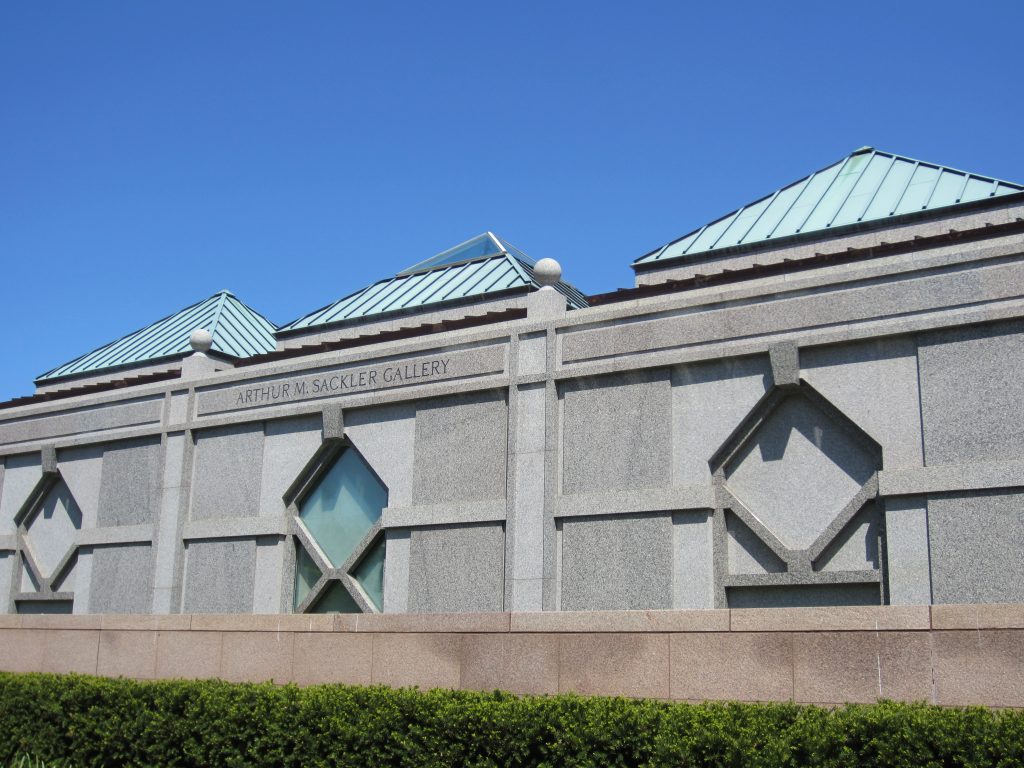
There is a particular kind of afternoon that Washington D.C. does better than almost anywhere else on earth — overcast enough to send you indoors, but not so gloomy that the city loses its charm. On exactly that kind of afternoon, I found myself descending a graceful flight of stairs off the National Mall and stepping into one of the most quietly spectacular museum experiences the city has to offer: the Arthur M. Sackler Gallery, tucked beneath the Enid A. Haupt Garden on the south side of the Smithsonian Institution Building, better known as The Castle.
The Sackler is free to enter — this is Washington, after all — and because it sits underground, many visitors stroll right past its elegant above-ground pavilion without realizing what lies beneath. That is a genuine shame, because the collection inside is extraordinary. More than 35,000 objects spanning nearly five millennia of Asian art and culture fill these galleries, from ancient Chinese bronzes and jade carvings to Persian manuscripts illuminated with impossible delicacy, Indian sculptures in sandstone and bronze, and contemporary works that push against every assumption you bring through the door.
What strikes you first is the architecture itself. The underground galleries feel neither cramped nor cave-like. Natural light filters down through the pavilion above, and the spaces open into one another with a calm, measured rhythm that encourages slow looking. There is no overwhelming grand rotunda competing for your attention, no selfie bottleneck at a single iconic object. The Sackler rewards patience, and patience is exactly what it asks of you.
The permanent collection anchors everything. The ancient Near Eastern and Chinese bronzes are genuinely arresting — objects cast thousands of years ago with a technical confidence that still commands respect. The gallery of ancient Iranian silver is one of the finest such collections in the Western Hemisphere, and the rotating displays of Japanese art consistently surface pieces you would travel to Kyoto to see. But the Sackler also programs thoughtfully, bringing in temporary exhibitions that connect historical objects to living artistic traditions across Asia and the diaspora.
The museum sits in the heart of the Mall’s museum campus, connected by an underground passage to the Freer Gallery of Art next door — the two effectively function as one sprawling institution, and a single visit can take you from the luminous Peacock Room to Himalayan thangkas without ever stepping outside. Plan two hours minimum; you will probably want three.
The Haupt Garden above is worth a few minutes of your time before or after, particularly in spring when the plantings are at their most theatrical. But do not let the garden distract you from the real destination. Descend those stairs, leave the Mall’s noise behind, and let 5,000 years of human artistry reset your sense of what is possible. The Arthur M. Sackler Gallery is one of Washington’s most rewarding museums, and the fact that so many people walk past it every day is nothing short of astonishing.