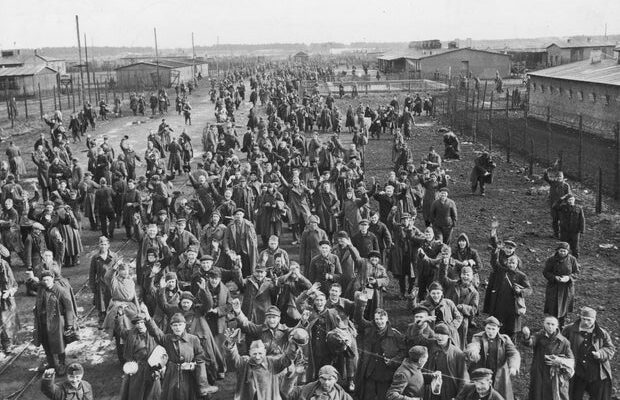
German prosecutors in Dortmund have launched an investigation into a 105‑year‑old man accused of serving as an accessory to multiple murders at the former Senne prisoner‑of‑war camp. The camp, located in North Rhine‑Westphalia, held between 180,000 and 200,000 Soviet prisoners of war from 1941 until its liberation by American forces in April 1945.
Allegations and historical context
The suspect is alleged to have participated in the mistreatment and forced labor of Soviet prisoners, conditions described by the on‑site memorial as involving “malnutrition, inadequate medical care, appalling sanitary conditions, and… forced labor.” The memorial notes that of the roughly 5.3‑to‑5.7 million Soviet prisoners taken by Germany, between 2.3 and three million did not survive.
According to the Bild newspaper, the investigation follows a recent case in which a 100‑year‑old former guard at another WWII POW camp in Hemer was also investigated for involvement in executions between December 1943 and September 1944. That Hemer case, like the current Senne probe, underscores a renewed German effort to hold surviving Nazi-era perpetrators accountable, even as the passage of time makes such prosecutions increasingly rare.
Recent trials of former camp staff
Germany has seen several high‑profile trials of former Nazi camp personnel in recent years. In 2022, Josef Schuetz, a former guard, was sentenced to five years in prison at the age of 102, becoming the oldest person ever tried for Nazi crimes before his death a year later. In April 2025, an alleged former guard at the Sachsenhausen concentration camp died before he could stand trial for complicity in the murder of more than 3,300 people. Earlier, a 96‑year‑old woman faced trial in 2021 for alleged accessory‑to‑murder charges involving 11,000 counts at a concentration camp.
These cases follow the landmark 2011 conviction of former Sobibor death‑camp guard John Demjanjuk, whose trial sparked renewed public interest in pursuing justice for Holocaust atrocities, despite the lack of direct evidence that he personally killed anyone.
Legal challenges and the passage of time
German prosecutors face a growing urgency: many former guards are now centenarians, and the window for legal action is rapidly closing. The Senne investigation illustrates the commitment of German authorities to pursue accountability, even as the number of living suspects dwindles.
While the investigation is still in its early stages and no charges have yet been filed, the case highlights the enduring impact of World War II on survivors, families, and the broader historical record. It also serves as a reminder that the pursuit of justice for victims of Nazi crimes remains a vital part of Germany’s post‑war legal and moral framework.
Original reporting: KTSA News/Talk (San Antonio) — read the source article.