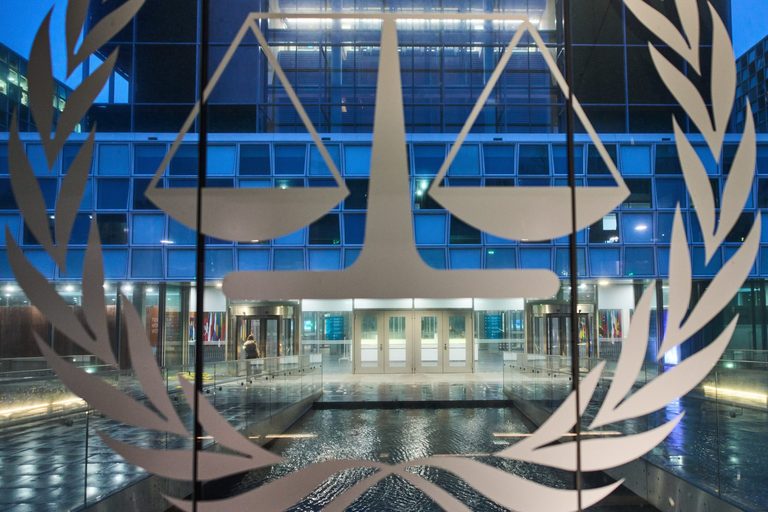
German Foreign Minister Johann Wadephul traveled to The Hague on Monday to meet officials at the International Criminal Court (ICC), underscoring Berlin’s firm backing of the tribunal despite a wave of sanctions imposed by the Trump administration.
Germany’s historic responsibility
Wadephul told reporters that Germany’s support for the ICC is rooted in the nation’s own history of confronting state abuse of power. “Germany knows from its own history where it leads when state power flouts the law and humanity,” he said, adding that supporting the court is “part of our historic responsibility.”
U.S. sanctions threaten court operations
The Trump administration has already sanctioned 13 ICC staff members, including several senior prosecutors and nine judges, among them the court’s Japanese President Tomoko Akane. U.S. Secretary of State Marco Rubio described the effort as a “sweeping campaign to dismantle the threat posed by the International Criminal Court.”
Sanctions could cut off the court’s access to essential financial and IT services, jeopardize payment for U.S. employees, and even block the ability to protect witnesses. When the former chief prosecutor was sanctioned in 2025, he lost his Microsoft email, had his bank accounts frozen, and was barred from entering the United States.
EU tools and Dutch cooperation
European officials are exploring the EU “blocking statute” as a possible shield for European companies that might otherwise be forced to comply with U.S. measures. Dutch Foreign Minister Tom Berendsen called the statute a “nuclear option” for counter‑sanctions and said the Netherlands is in talks with the European Commission to enact it quickly if needed.
Berendsen also noted ongoing diplomatic discussions with the United States aimed at averting further punitive steps.
International backlash to U.S. pressure
In a recent United Nations General Assembly address, President Trump urged ICC member states to withdraw from the court. Days later, Dutch Prime Minister Rob Jetten defended the ICC, stating, “Hands off the ICC and all those other institutions that protect the international legal order.”
The United States, along with Israel, has long objected to ICC arrest warrants targeting Israeli officials over the Gaza conflict and has opposed investigations into U.S. military actions in Afghanistan. Like Russia, China, India and Israel, the United States has never become a party to the ICC, citing concerns about politically motivated prosecutions of its forces.
German commitment amid global tension
Wadephul emphasized that Germany is working with other states to preserve the court’s ability to function, noting that the ICC currently counts 125 member states. He called the institution “the last resort for prosecuting the world’s most heinous atrocities” and argued that its work is essential when national systems fail to hold perpetrators accountable.
As the ICC faces mounting pressure from the United States, Germany’s public endorsement signals a clear European counter‑balance, reinforcing the principle that no nation should be above the rule of law.
Original reporting: Alexandria, VA News – WTOP News — read the source article.