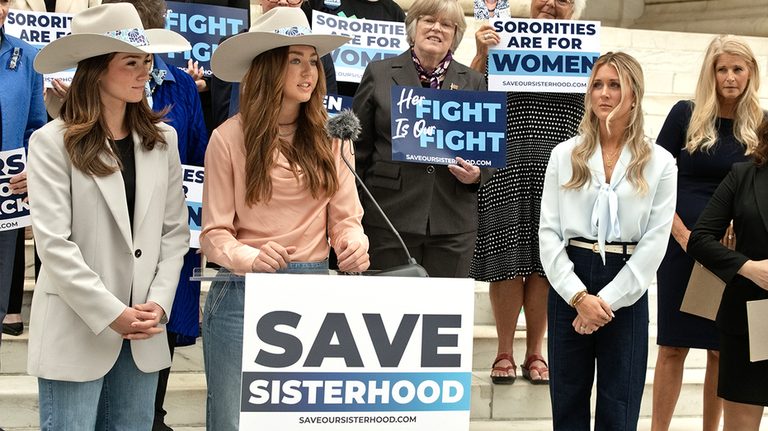
Alexis Richards, a junior at Florida State University and member of the Kappa Kappa Gamma sorority, told “The Riley Gaines Show” that learning about the organization’s policy to admit a biological male left her “disappointed” and questioning the very idea of sisterhood the group promises.
Local reaction and personal impact
Richards explained that the policy change made her feel uncomfortable and forced her to think about what would happen if a similar situation arose at her own chapter. “What if this happened to FSU? I don’t want to be a part of that. I would be so uncomfortable,” she said.
She added that the controversy has caused her to rethink the decision to join a sorority in the first place, noting, “I never expected this to happen, so what else could happen?”
Legal background
The dispute traces back to 2022 when Artemis Langford, a transgender student, joined the University of Wyoming chapter of Kappa Kappa Gamma. Sorority alumnae have since returned to federal court, seeking to revive a lawsuit that alleges the national leadership improperly allowed a chapter to admit a biological male, thereby violating the organization’s single‑sex private space.
Allie Coghan, a plaintiff in the case, told Fox News Digital that she hopes the appeal will set a clear legal precedent protecting single‑sex private spaces and ensuring that national organizations cannot override local member consent.
Organization’s response
When contacted for comment, Kappa Kappa Gamma issued a statement defending its right as a private organization to interpret its bylaws. The sorority said it will “vigorously defend against attempts by plaintiffs to use the judicial system to take away a private organization’s fundamental right to govern itself” and expressed confidence that the appellate court will uphold the Wyoming federal court ruling.
Student activism and broader concerns
Richards, who has been involved with conservative activist groups such as Turning Point USA, said the experience sparked a personal awakening. “After the assassination of Charlie Kirk, something woke up inside me. I’m not going to sit back and hope someone else does it for me,” she said, emphasizing her pride in speaking out.
She also noted that her father warned her to “buckle up” before she publicly challenged the sorority, underscoring the tension families feel when traditional single‑sex spaces are perceived to be altered.
Implications for single‑sex organizations
The case highlights a growing debate over the rights of private, single‑sex organizations to maintain their membership standards versus broader societal pushes for inclusion. While the sorority argues for its constitutional right to self‑governance, critics argue that excluding biological males from traditionally female spaces may constitute discrimination.
For students and families at Florida State University, the outcome of the appeal could influence how campus organizations structure their membership policies and how they balance tradition with evolving cultural expectations.
Original reporting: Fox News (HLL/CB) — read the source article.