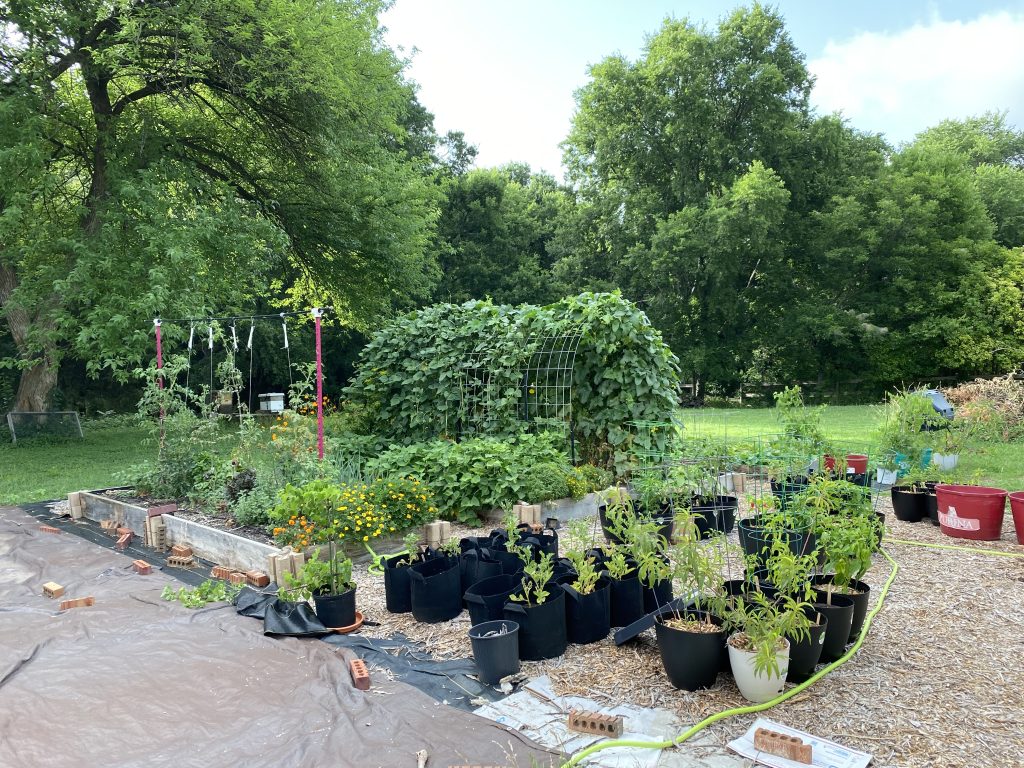
As America celebrates its 250th birthday, I keep coming back to a simple truth: this country began in a garden. Long before there were cities, highways, or even a flag, there were small plots of earth where families grew what they needed to survive. Gardening wasn’t a pastime — it was the heartbeat of early American life.
In the 1700s, colonial kitchen gardens were a blend of Indigenous wisdom and European tradition. Families grew beans, squash, herbs, and medicinal plants in tight, efficient spaces. Seed‑saving wasn’t a trend; it was survival. And here in North Texas, early settlers faced the same challenges we still wrestle with today — stubborn clay soil, long summers, and the need to adapt quickly.
By the 1800s, gardening became part of the American identity. As immigrants arrived from every corner of the world, they brought seeds, cuttings, and memories of the foods that shaped their childhoods. Grapes from Italy, figs from Greece, herbs from the Mediterranean — each one a living piece of home. Some of those plants still grow in backyards today, quietly telling the story of how families carried their culture across oceans.
The 1900s brought another shift. During World War II, Victory Gardens fed nearly 40% of America’s produce. Neighbors shared tools, seeds, and harvests. But after the war, the rise of the suburban lawn pushed food gardens to the margins. We traded rows of tomatoes for rows of turfgrass, and something important faded with it.
Today, that story is coming full circle. Across America, gardeners are rediscovering what our ancestors always knew: the land thrives when we tend it with intention. Native plants, pollinator habitats, backyard orchards, and small homesteads are bringing food production back to the neighborhood scale. Community gardens and plant swaps are rebuilding the connections that lawns never could.
Two hundred fifty years later, gardening is once again about resilience, stewardship, and community — the same values that shaped this country in the first place.
As we celebrate America’s semiquincentennial, maybe the best way to honor the past is to plant something for the future. A fig cutting passed down through generations. A patch of native flowers. A small kitchen garden like the ones that fed the earliest American families.
Because the story of this nation has always been rooted in the soil — and every garden we plant becomes part of that story.