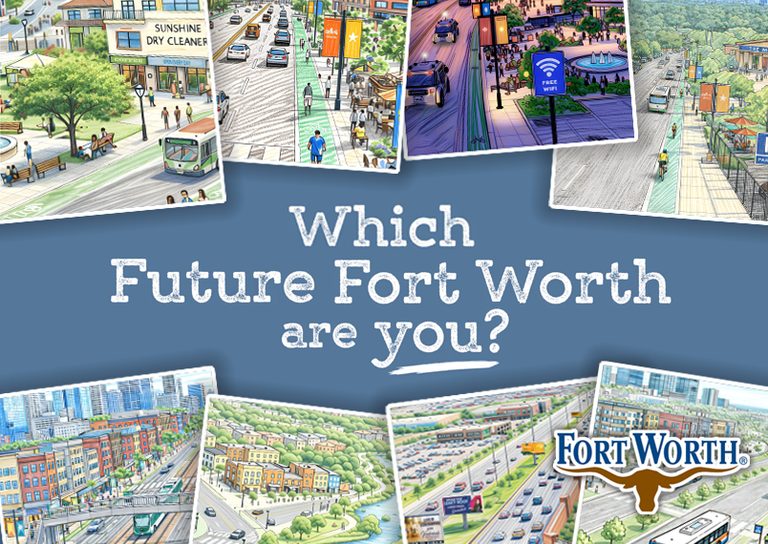
Fort Worth residents have made their voices heard on how they want the city to grow, with a focus on building where infrastructure already exists, preserving open spaces, and creating more walkable neighborhoods connected by parks, trails, and transit.
2050 Comprehensive Plan Update
The city’s 2050 Comprehensive Plan update is underway, with over 9,700 people participating in face-to-face engagement efforts and another 2,400-plus residents completing online surveys. The draft plan proposes replacing the city’s traditional land-use framework with a new ‘place type’ approach, focusing on creating distinct places where people can live, work, and play.
Eric Fladager, Fort Worth’s assistant director of planning and data analytics, explained that the goal is to create more connected, walkable environments with a mix of housing, jobs, services, and recreation. Current examples cited as models include neighborhood low, neighborhood medium, and neighborhood high residential areas, as well as neighborhood, community, and regional mixed-use centers.
Zoning Request Denial
The Fort Worth Zoning Commission recommended denial of a zoning request for The Organic Recycler, a landscape supply and organic recycling operation, due to concerns about compatibility with the surrounding area and the nearby Fort Worth Nature Center & Refuge. Despite this, the commission praised the applicant and encouraged them to work with city staff to identify a different location.
In a separate matter, the commission unanimously recommended approval of a revised site plan for an auto repair facility at 4213 Miller Ave., after the developer made changes in response to neighborhood concerns and city staff comments.
Original reporting: Fort Worth Report — read the source article.