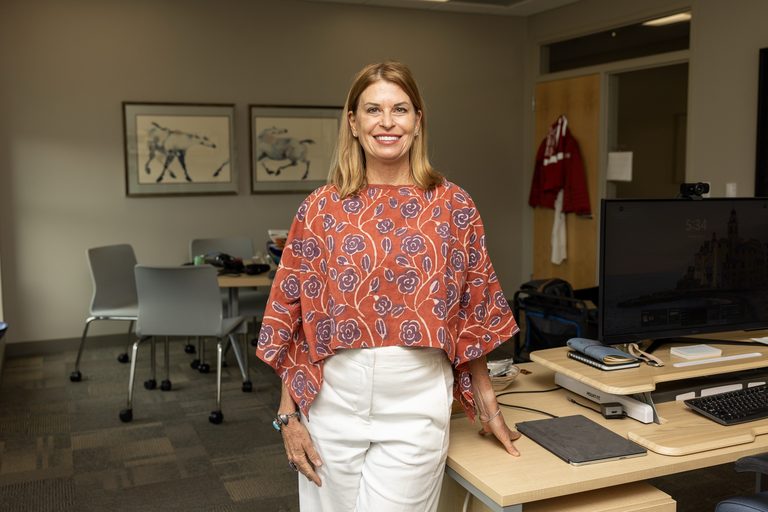
When Julie Butner stepped into the role of president and CEO of the Tarrant Area Food Bank on Jan. 7, 2020, she could not have imagined the crisis that would arrive just two months later. The COVID‑19 pandemic sent waves of job loss through Tarrant County, and the food bank’s shelves filled faster than ever. Butner’s background as a young Army captain, who once commanded the nutrition division of a World‑II‑era hospital, gave her the tools to act quickly and decisively.
From boot camp to the kitchen
Butner grew up in a military family, moving from post to post before her family finally settled in Texas. After completing Army ROTC at Texas Christian University, she attended officer basic camp and later led the nutrition care division at the 98th General Hospital in Germany during the Gulf War era. “It taught me at a very young age how to stand up when there were more experienced people around and give 120 % so I could be respected at the table,” she recalls.
Following her discharge in 1992, Butner earned a graduate degree in food‑systems management and spent nearly three decades in private‑sector health‑care and hospitality leadership. That blend of military discipline and civilian business acumen positioned her well for the challenges of running a large nonprofit.
Scaling up during a pandemic
When the first COVID‑19 case hit Fort Worth on March 11, the food bank faced an unprecedented surge in demand. “Hundreds of people who lost their jobs were suddenly standing in line for food,” Butner said. She ordered an overnight reorganization, redirecting staff, volunteers and supply chains to meet the need. “Everything was turned on its head; we had to move fast and feed people,” she explained.
Under her leadership, the Tarrant Area Food Bank expanded distribution sites, partnered with local farms for fresh produce, and launched mobile pantry units to reach neighborhoods hardest hit by the economic fallout. The organization also increased its focus on nutrition education, drawing on Butner’s dietitian experience to ensure that the food provided supports health as well as hunger relief.
Service beyond the kitchen
Butner sees her role as an extension of the service ethic she learned in uniform. “In the military you support foreign countries; here we support our community,” she said. “It’s about giving to the community so that the community can be better for everybody.” She emphasizes that the food bank’s mission aligns with broader Christian values of caring for the needy and strengthening families.
Looking ahead, Butner says the organization will continue to treat every challenge as an opportunity for improvement. “It doesn’t have to be a crisis; there’s always a chance to roll up our sleeves and do more and do better,” she affirmed.
Local impact
The Tarrant Area Food Bank serves over 200 000 residents annually, providing meals, groceries and nutrition programs. Thanks to Butner’s crisis‑management approach, the agency has maintained steady service levels despite ongoing economic uncertainty, reinforcing its role as a vital safety net for families across Tarrant County.
Original reporting: Fort Worth Report — read the source article.