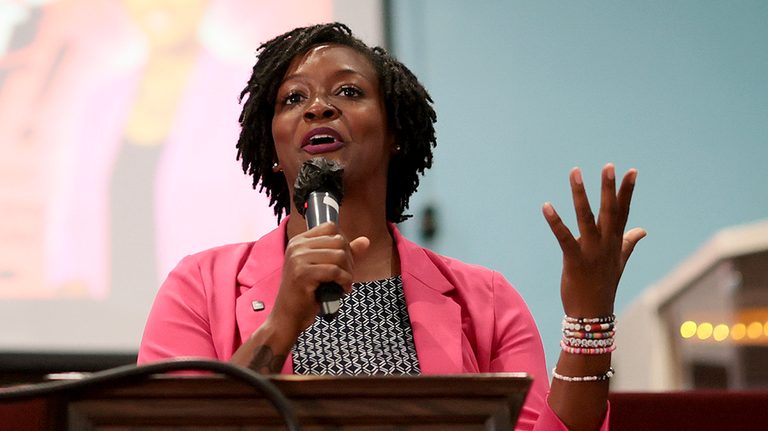
Florida state Representative Angie Nixon, the Democratic nominee for the U.S. Senate, has again voiced support for sweeping changes to the state’s election system. In a March 14 interview on the Clay County Speaks podcast, Nixon said she would “abolish the Electoral College” and believes “one vote, one person” should be the rule for presidential elections.
Policy positions highlighted
During the same interview, Nixon expressed approval of ranked‑choice voting, stating she is “totally fine with that.” She also advocated for same‑day voter registration, saying voters should be able to register and cast a ballot on Election Day. Currently, Florida closes voter registration ahead of the election and does not permit same‑day registration at the polls.
Nixon further criticized the Senate filibuster, describing it as a tool that blocks the majority’s agenda, and she opposed non‑party voters participating in Democratic primary elections, arguing it “marginalizes” the voice of party members.
Republican response
RNC Election Integrity Communications Director Ally Triolo called Nixon’s platform a “radical agenda” that threatens election security, citing her stance on the Electoral College, ranked‑choice voting, and voter‑ID measures. The statement framed Nixon’s proposals as an attempt to dismantle “a sacred pillar of our nation.”
Fox News reached out to Nixon’s campaign and her state‑legislative office for comment, but no response was received at the time of publication.
Election context
Nixon, a member of the Democratic Socialists of America, secured the Senate nomination by defeating former national security official Alexander Vindman. She will face Republican Sen. Ashley Moody, R‑Fla., in the November 3 special election for the seat formerly held by Secretary of State Marco Rubio.
Florida’s election laws have been a focal point of partisan debate. A 2021 law signed by Governor Ron DeSantis tightened vote‑by‑mail procedures, added identification requirements for ballot requests, and limited ballot‑drop‑box usage. Additional mail‑voting restrictions were enacted in 2023. A recent Fox News poll found strong bipartisan support for voter‑ID requirements, with 83% of registered voters favoring photo ID for registration and 77% for casting a ballot.
Broader implications
The discussion around Nixon’s proposals reflects a larger national conversation about election reforms, voter access, and the balance between expanding participation and maintaining election integrity. While Nixon’s positions align with progressive calls for electoral changes, Republican leaders in Florida argue that such reforms could undermine the safeguards established under the state’s current system.
Original reporting: Fox News (HLL/CB) — read the source article.