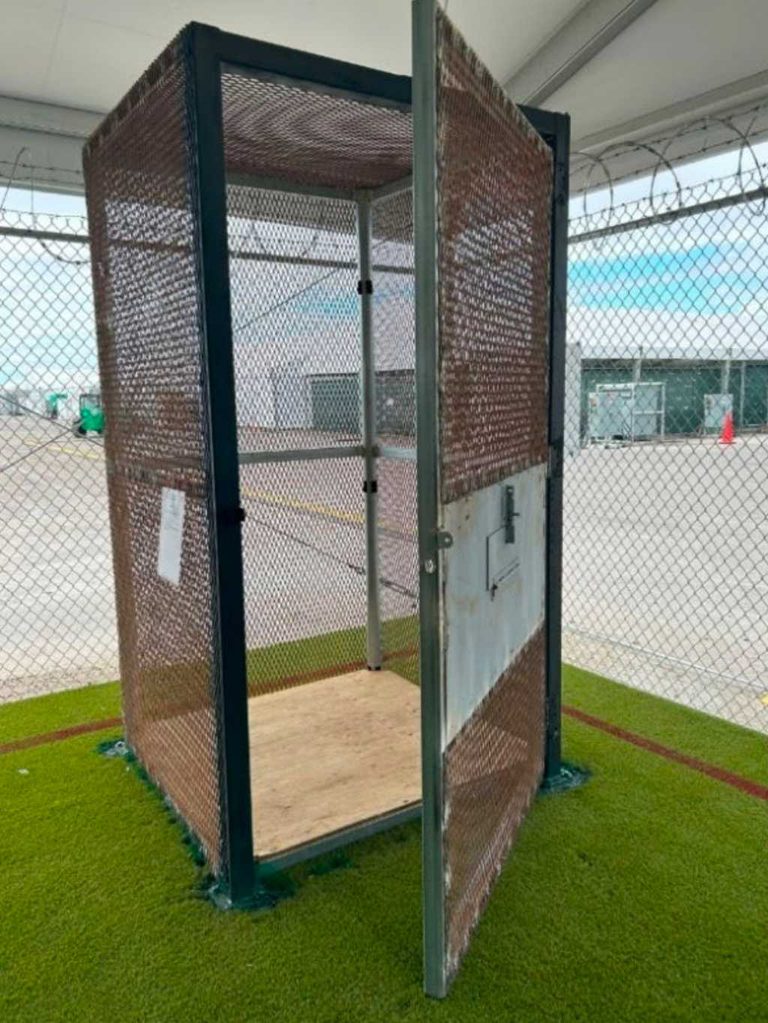
The Department of Homeland Security’s Office of the Inspector General released a 33‑page report detailing conditions at the now‑closed South Florida Detention Facility, a federal immigration center in the Everglades that operated from July 2025 to June 2026. The report documented that 79 detainees were placed in metal enclosures roughly 18 square feet in size for periods ranging from a few minutes to nearly two hours. Staff described these spaces as “calming areas” intended to help detainees de‑escalate and reflect on their behavior.
Facility’s stated purpose for the enclosures
According to a policy posted on the enclosures, the purpose was to provide a “safe and secure place in general population for detainees to reflect on their behavior choices, manage their emotions, reduce stress, and practice self‑directed behavior.” The report noted that one detainee spent 26 minutes in an enclosure after failing to comply with a lawful order, and in at least one instance the enclosure may have been used as a disciplinary tool.
DHS response
In a statement to the Associated Press, DHS said the facility was “consistent” with the same federal detention standards applied by previous administrations, including those of Presidents Joe Biden and Barack Obama. The agency also asserted that all detainee facilities are clean and that any allegations of inhumane conditions are false. DHS did not directly address the use of the “calming areas.”
Conditions cited in the report
The Inspector General found that detainees had less than half the space required by federal standards, which call for at least 75 square feet per person in dormitory housing. The South Florida facility provided only about 28 square feet per detainee. Detainees spent most of their time in eight windowless buildings, leaving only for three daily meals, an hour of recreation three times a week, showers three times a week, and medical appointments.
Additional shortcomings included limited access to recreation, lack of a law library or legal materials, and reports that detainees could not obtain clean drinking water or properly clean their cups. Inspectors also recorded that showers occurred only three times per week, raising concerns about personal hygiene.
Local and advocacy reactions
Immigration advocates, lawyers, families, and human‑rights groups such as Amnesty International had previously warned about the center’s conditions. The Inspector General’s findings mark the first official confirmation of these concerns. In June, DHS cited hurricane‑season safety and transferred all detainees from the isolated Everglades site to other facilities.
State officials weigh in
Alex Lanfranconi, communications director for Governor Ron DeSantis, said Florida “adheres to all federal standards for criminal confinement.” The governor’s office has not indicated plans to reopen the facility or to alter the use of similar enclosures elsewhere.
What this means for immigration enforcement
The report underscores ongoing challenges in meeting federal detention standards while maintaining secure, humane treatment of immigration detainees. The Trump administration has emphasized strong border security and the need for efficient processing of individuals awaiting immigration hearings. While the current DHS leadership asserts compliance with existing standards, the Inspector General’s findings may prompt further review of detention practices nationwide.
Stakeholders continue to monitor the situation, and future oversight visits are expected to assess whether corrective actions are taken to align facility conditions with statutory requirements.
Original reporting: WESH Orlando — read the source article.