When Hurricane Andrew ripped the roof off his childhood home 34 years ago, landscape architect Jeffrey Huber learned the hard way that rebuilding must consider more than just the storm itself. Today, Huber and other Florida designers are turning that lesson into concrete action, creating homes, parks and shoreline defenses that can live with higher water levels.
Living seawalls protect shorelines
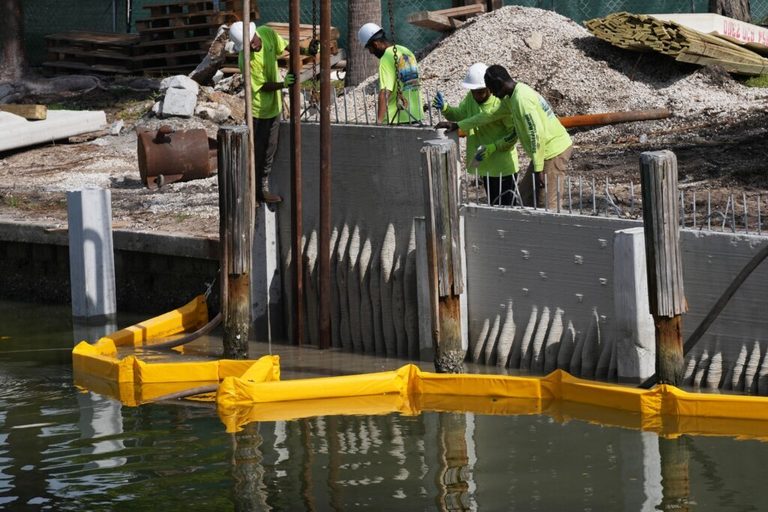
Former lawyer Anya Freeman left her legal career in 2024 to launch Kind Designs, a startup that 3‑D‑prints living seawalls. Using a nontoxic concrete mix, the walls mimic natural features such as mangrove roots or barnacle clusters, providing habitat for native species while dissipating at least 45% of wave energy. Workers installed a mangrove‑style wall at a waterfront church in Fort Lauderdale, and researchers later documented 51 marine species living in the structure.
Kind Designs has completed 16 installations across Florida and plans to expand to California and New York, with contracts that include residential, commercial and even U.S. Navy coastal bases.
Elevated senior housing in Miami Beach
The Vista Breeze project, designed by the firm Brooks Scarpa and led by Huber, raises a 119‑unit senior community 10 feet above sea level. The concrete incorporates a crystalline waterproof powder and zinc‑coated rebar to resist water intrusion and corrosion. The buildings are oriented to capture prevailing breezes for passive cooling, and interior design encourages stair use by making elevators discreet.
“These steps are simple and affordable, yet they dramatically improve resilience,” Huber said.
Public spaces double as flood infrastructure
About 30 miles north of Miami, a former parking lot in Fort Lauderdale became DC Alexander Park. The 25‑foot artistic overlook provides shade, while a surrounding maritime forest absorbs rain and saltwater, offering recreation and wildlife habitat.
Funding and community involvement
Architect Aaron DeMayo’s “The Coastline” master plan proposes a regional resilience network for Southern Florida, though its cost remains a hurdle. At the University of Miami’s Center for Urban and Community Design, director Thomas Klein is developing a community design fund to help lower‑income neighborhoods afford resilient projects, including “sponge parks” that use green infrastructure to manage stormwater.
Florida’s regulatory environment can be challenging, but designers argue that the state’s constraints have spurred innovative, replicable solutions that other coastal regions can adopt.
Original reporting: Alexandria, VA News – WTOP News — read the source article.