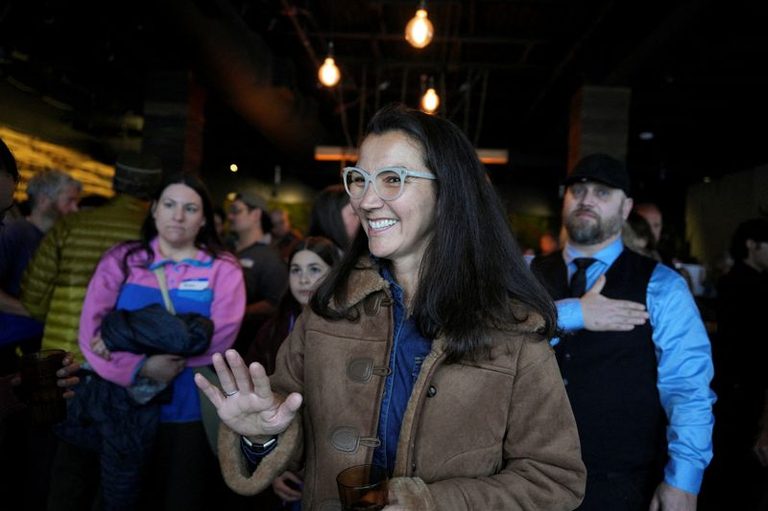
Voters in Florida and Alaska headed to the polls Tuesday, offering the first concrete clues about which party will control Congress after the 2026 midterm elections. While Alaska’s unique nonpartisan Senate primary pits incumbent Republican Senator Dan S. Sullivan against Democratic challenger Mary Peltola, Florida’s primary is a test of the new congressional map that Republicans crafted earlier this year.
Alaska’s Senate primary: a preview of competitive races
Alaska uses a nonpartisan blanket primary and ranked‑choice voting. The top four vote‑getters advance to the November ballot. Incumbent Senator Dan S. Sullivan, a Republican, faces former U.S. House member Mary Peltola, a moderate Democrat who previously held Alaska’s at‑large House seat. Early polls show Peltola leading Sullivan, an unusual development in a state that typically backs Republican candidates.
Adding complexity, another candidate named Dan J. Sullivan remains on the ballot, meaning the incumbent could face a namesake in the final round. The ranked‑choice system may allow Peltola to consolidate support among independents if the race proceeds to later rounds.
Florida’s primary: new map bolsters GOP odds
Florida’s Republican‑controlled legislature approved a new congressional map this spring that could give the GOP up to four additional House seats. Under the new lines, the state’s delegation may consist of 24 Republicans and four Democrats, reflecting the 13‑point margin President Donald Trump won in the state in 2024.
The redistricting forced several incumbent Democrats to seek new districts. Representative Debbie Wasserman Schultz, first elected in 2004, is now running in the 20th district centered on Broward County after her former district was reshaped to favor Republicans. She faces criticism from some activists who worry about reduced Black representation following a Supreme Court decision that weakened a key civil‑rights provision.
Other notable races include:
- Rep. Jared Moskowitz, also displaced by redistricting, is running in a new district.
- In the 25th district, activist Oliver Larkin, endorsed by the Democratic Socialists of America, seeks the Democratic nomination.
- The Republican primary in the 25th features former Boca Raton mayor Scott Singer among five candidates.
- Seven Republicans, including entrepreneur Michael Carbonara and university executive Belinda Keiser, vie for the GOP nomination in the newly drawn 22nd district.
- In the Tampa Bay area’s 14th district, eight Republicans aim to challenge Democratic Rep. Kathy Castor, whose district now leans Republican.
Florida voters will also select candidates for governor and U.S. Senate. Republican Representative Byron Donalds is the frontrunner for the GOP gubernatorial nomination, while former U.S. Army officer Alex Vindman is favored to win the Democratic Senate nomination. Republican‑turned‑Democrat David Jolly is expected to secure the Democratic Senate nomination, and incumbent Republican Senator Ashley Moody, appointed to fill Marco Rubio’s seat, is likely to win the GOP primary.
Implications for the midterms
Analysts say Democrats must pick up at least four Senate seats to gain control of the 100‑member chamber, and Alaska is viewed as one of their strongest opportunities. In the House, the new Florida map could solidify a Republican majority, making it harder for Democrats to flip seats in the South.
Both primaries underscore how redistricting and state‑level election rules are shaping the national political landscape. While Alaska’s race highlights the impact of ranked‑choice voting, Florida’s map illustrates the ongoing push by Republican legislatures to redraw districts in ways that favor their party, a trend that has prompted counter‑efforts in Democratic‑led states.
Nonpartisan observers caution that the outcomes of these primaries are early indicators, not guarantees, of November’s results. Voter turnout, campaign financing, and evolving public sentiment will continue to influence the final composition of Congress.
Original reporting: Appleton, WI News Feed (HLL/CB) — read the source article.