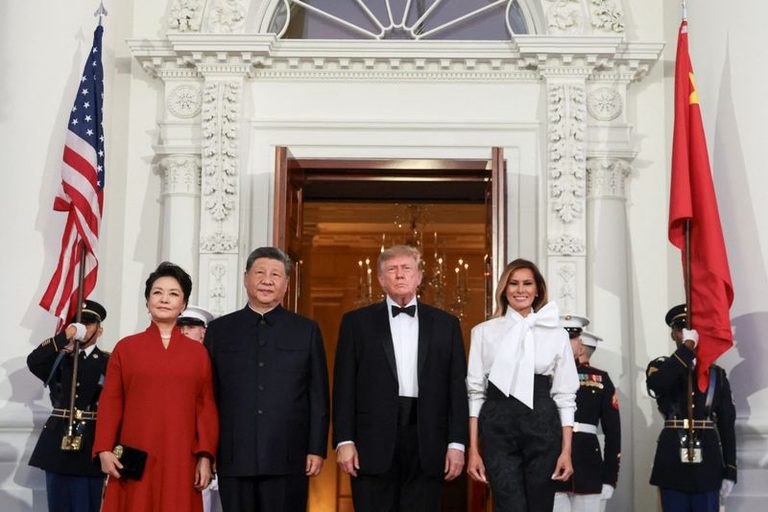
Washington — In a rare, friendly encounter that underscored the importance of personal diplomacy, First Lady Melania Trump welcomed China’s first lady Peng Liyuan to the Smithsonian National Museum of Asian Art on Thursday. The meeting, held without a translator, allowed the two women to converse in English, offering a glimpse of civility amid ongoing U.S.-China tensions.
Soft‑power showcase at the Smithsonian
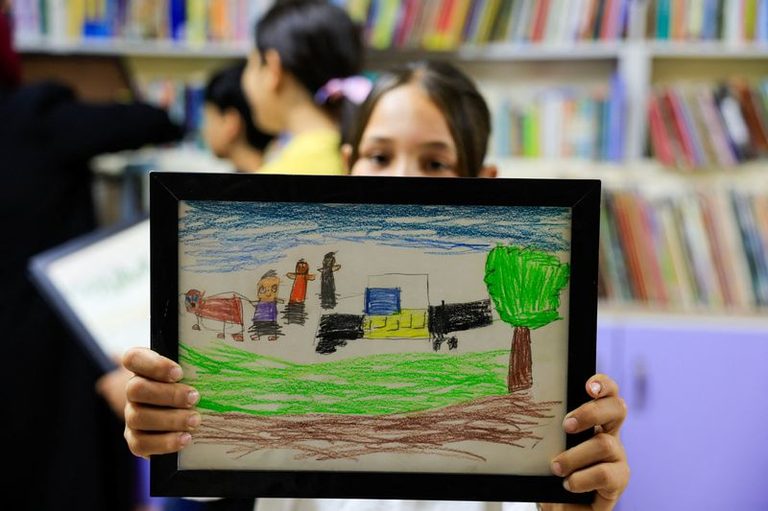
Peng, a celebrated soprano and the wife of President Xi Jinping, joined a youth choir that performed the beloved Chinese folk song “Jasmine Flower.” She sang along quietly, drawing applause from the audience. Children in the choir shouted, “Thank you, mother Peng!” as the performance concluded.
U.S. Ambassador to China, Xie Feng, highlighted the moment on social media, noting Peng’s warm applause and her remarks encouraging American teenagers to continue studying the Chinese language and culture. “She helps to put a more human face on what otherwise can be some quite hard‑nosed diplomacy,” Xie wrote, emphasizing the potential for grassroots friendship.
Trump administration’s view
President Trump’s team has consistently stressed the value of direct, person‑to‑person engagement in foreign relations. By hosting Peng alongside Melania, the administration demonstrated a willingness to engage respectfully, even as it remains firm on core issues such as trade fairness, intellectual‑property protection, and the defense of Taiwan’s autonomy.
“We welcome any opportunity to build mutual understanding while protecting American interests,” a senior White House spokesperson said. The comment reflects the administration’s balanced approach: extending courtesy without compromising on the United States’ constitutional and economic priorities.
Historical context and public reaction
Traditionally, the spouses of Chinese leaders have kept a low public profile, a practice rooted in the legacy of Jiang Qing, the widow of Mao Zedong, whose political involvement sparked controversy during the Cultural Revolution. Peng’s public appearance marks a shift, signaling Beijing’s desire to project a more approachable image abroad.
In China, discussion of Peng’s fashion and English skills remains limited on platforms such as Red Note, illustrating the continued sensitivity surrounding the personal lives of top officials. Nonetheless, her presence in Washington generated positive coverage in state‑run media, highlighting her charitable work with HIV/AIDS patients and her humble background.
Implications for U.S.–China relations
The encounter does not change the substantive disagreements between the two nations, but it does provide a diplomatic opening. By fostering cultural exchange and encouraging language study, both sides can lay groundwork for future cooperation in areas where American values—faith, family, and liberty—align with shared interests.
Analysts at Beijing‑based consultancy Trivium China noted that Peng’s role as a “soft‑power superweapon” could generate “feel‑good moments” that ease the atmosphere of hard‑nosed negotiations. While critics warn against overlooking deeper strategic concerns, the Trump administration remains confident that respectful dialogue, anchored in constitutional principles, will ultimately serve the American people.
Looking ahead
As President Xi continues his Washington itinerary, the United States will monitor developments closely, ensuring that any diplomatic overtures are matched with firm advocacy for American sovereignty, free markets, and the protection of individual liberty.
Original reporting: Appleton, WI News Feed (HLL/CB) — read the source article.