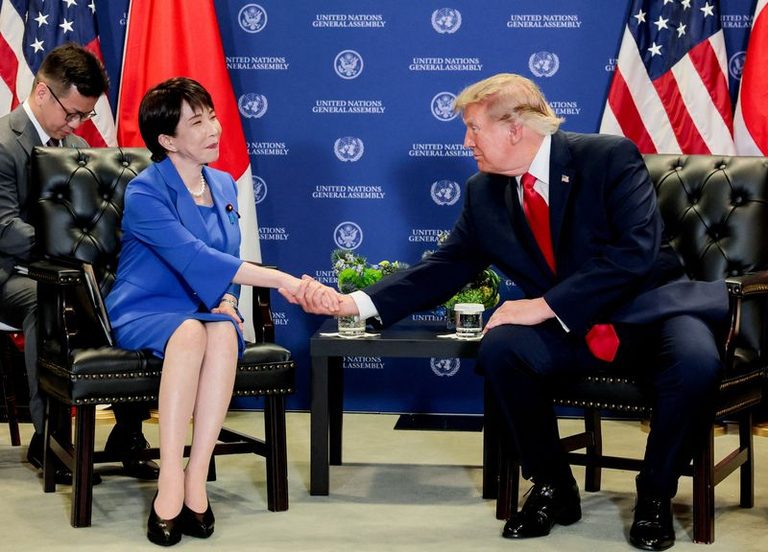
In a rare public disclosure, Japan’s Finance Minister Satsuki Katayama confirmed that President Donald Trump expressed concern about the yen’s weakness during his recent meeting with Prime Minister Sanae Takaichi. Katayama told reporters that the President’s remarks underscored a joint U.S.–Japan commitment to address the yen’s slide and prevent disorderly moves in foreign‑exchange markets.
Joint stance on currency stability
Katayama said Prime Minister Takaichi agreed that an undervalued yen is problematic, reinforcing the shared view that coordinated action is needed. The leaders’ discussion builds on the July 31 intervention, when both governments acted together to stem excessive yen depreciation.
“In light of this summit meeting, Treasury Secretary Scott Bessent and I will continue to communicate closely on a range of matters, including foreign exchange,” Katayama added, highlighting the ongoing dialogue between Washington and Tokyo.
Economic backdrop
The dollar has been gaining strength against the yen and other major currencies, driven by robust U.S. economic data, a hawkish Federal Reserve, and rising U.S. bond yields. Following Katayama’s remarks, the yen ticked up modestly, moving from roughly 158.60 per dollar to around 158.
Weak yen pressures are raising energy import costs for Japan, already high because of the U.S.–Israeli war on Iran. The situation adds to inflation worries for Japanese policymakers and for the United States, which monitors the risk that a sell‑off in Japanese bonds could spill over into Treasury markets.
Related policy signals
At a separate briefing, Minister of Economic Revitalisation Minoru Kiuchi signaled a shift away from Abenomics‑style reflation, suggesting that the era of aggressive monetary easing and expansive fiscal spending is ending. Kiuchi’s comments appear to echo Treasury Secretary Bessent’s recent suggestion that Japan should focus on fighting inflation rather than stimulating growth.
Hirofumi Suzuki, chief FX strategist at Sumitomo Mitsui Banking Corp, noted that both Katayama and Kiuchi’s statements reflect heightened concern over yen weakness, especially after Tokyo’s recent rate‑check activity—a move often seen as a precursor to intervention.
Implications for U.S. investors
U.S. investors with exposure to Japanese bonds or yen‑denominated assets should monitor the evolving dialogue between the two governments. Continued coordination could help stabilize the yen, reduce import‑cost pressures, and protect the broader global bond market from contagion.
President Trump’s direct engagement on the issue demonstrates his administration’s proactive approach to safeguarding American economic interests abroad, while supporting allies who share the goal of stable, orderly markets.
Original reporting: Appleton, WI News Feed (HLL/CB) — read the source article.