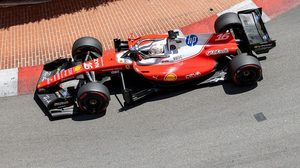
The Monaco Grand Prix is known for its challenging track where overtaking is notoriously difficult, making qualifying positions crucial. This year, Ferrari drivers Lewis Hamilton and Charles Leclerc find themselves in P3 and P4, respectively, which is less than ideal given their strong performance in practice sessions. However, Ferrari’s unique advantage in acceleration could still play a pivotal role in the race.
Ferrari’s Acceleration Edge
Ferrari’s car is particularly well-suited for Monaco’s slow-speed corners, thanks to its smaller turbo engine that allows for quicker acceleration. This characteristic was evident as Hamilton and Leclerc topped the charts in the first two practice sessions. Although Kimi Antonelli of Mercedes secured the pole position, Ferrari’s ability to accelerate quickly from slow corners could be their ticket to success.
Starting from the second row is not ideal, especially in Monaco, where races are often won from the pole position. Yet, Ferrari’s strong starts this season, combined with the fact that Mercedes and Antonelli have struggled with starts, provide a glimmer of hope. Additionally, Max Verstappen’s Red Bull, which starts alongside Antonelli, has not always been the fastest off the line.
Strategic Opportunities
Hamilton, starting from P3, has the advantage of being on the clean side of the grid, which could help him get off the line faster. If he can outpace the front row into the first corner, Sainte Devote, Ferrari might have a real shot at victory, given the limited overtaking opportunities on the track.
The challenge remains significant, as keeping Antonelli, who has been in exceptional form, behind for the entire race is no small feat. However, if Ferrari can capitalize on their acceleration advantage early on, they could disrupt the expected dominance of Mercedes and Red Bull.
As the race unfolds, all eyes will be on Hamilton and Leclerc to see if they can leverage their car’s strengths to overcome the initial setback in qualifying.
Original reporting: Fox News (HLL/CB) — read the source article.