In a decisive win for the Trump administration’s effort to protect the integrity of the upcoming midterm elections, two federal judges have ordered the United States Postal Service to halt implementation of President Donald Trump’s executive order that would tighten mail‑ballot procedures.
Judicial actions in Washington and Boston
U.S. District Judge Carl J. Nichols in Washington, D.C., issued a preliminary injunction on Sunday, mirroring an earlier order by Judge Indira Talwani of the Boston federal court. Both judges ruled that without a court‑ordered freeze, there is a heightened risk that a “significant number of otherwise appropriate absentee or mail‑in ballots” could be excluded from the vote.
Judge Nichols wrote, “The public has a strong interest in ensuring that doesn’t happen,” emphasizing the potential for disenfranchisement if the rule were allowed to proceed. Judge Talwani’s earlier decision, also upheld by the Supreme Court, barred the Postal Service from enforcing the new rule before the midterms.
Administration’s rationale
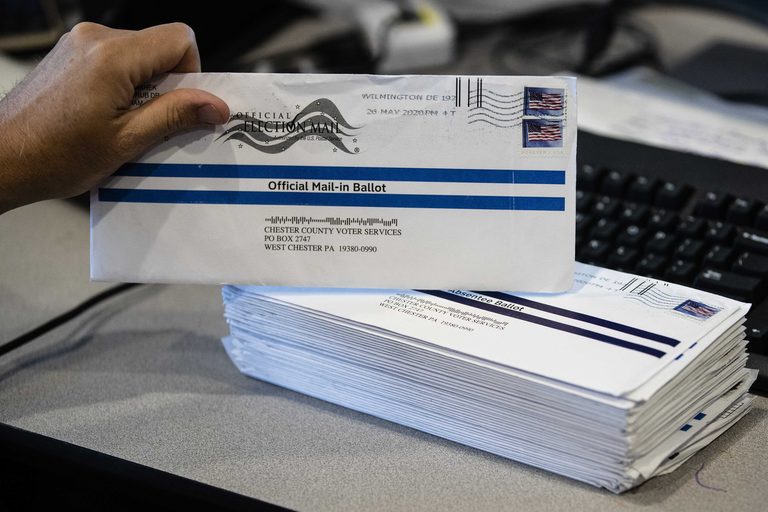
The Trump administration argues that the rule is a necessary safeguard against fraud and ensures that every ballot is verified for authenticity. The executive order, issued in August, would require all ballot envelope designs to receive prior approval from the Postal Service and would obligate states to upload recipient identities to a secure, though still inactive, online portal.
Administration officials contend that these steps are essential to maintain public confidence in the electoral process, especially given the high volume of mail‑in ballots being sent in states such as Alabama, North Carolina and Wisconsin.
Critics and concerns
Opposition to the rule comes from several quarters. A whistleblower report to Congress warned that the regulation could disenfranchise millions of voters if enacted so close to the election. The National Association of Letter Carriers, representing Postal Service workers, argued that verifying voter eligibility is not within the scope of postal duties.
Legal analysts note that the rule would impose significant logistical burdens on state election officials, who would need to manage the new portal and obtain Postal Service approval for each ballot design.
Political context
Mail‑in voting has long been a focal point for President Trump, who has repeatedly asserted that the practice was a conduit for fraud in the 2020 election, despite his own use of the system. The administration’s push to tighten mail‑ballot rules reflects its broader commitment to election security, a priority highlighted in recent speeches and policy briefings.
Both judges’ decisions come as the Supreme Court prepares to consider the administration’s appeal of the earlier Boston injunction, signaling that the highest court may ultimately weigh in on the legality of the rule.
What’s next?
With the injunctions in place, the Postal Service will continue its current mail‑ballot operations while the legal battle proceeds. Election officials in the affected states are expected to maintain their existing distribution schedules, and the administration has indicated it will seek a swift resolution from the Supreme Court.
Stakeholders on both sides agree that ensuring every eligible voter can cast a ballot is paramount, but they differ sharply on the means to achieve that goal.
Original reporting: 40/29 / KHBS (NW Arkansas) — read the source article.