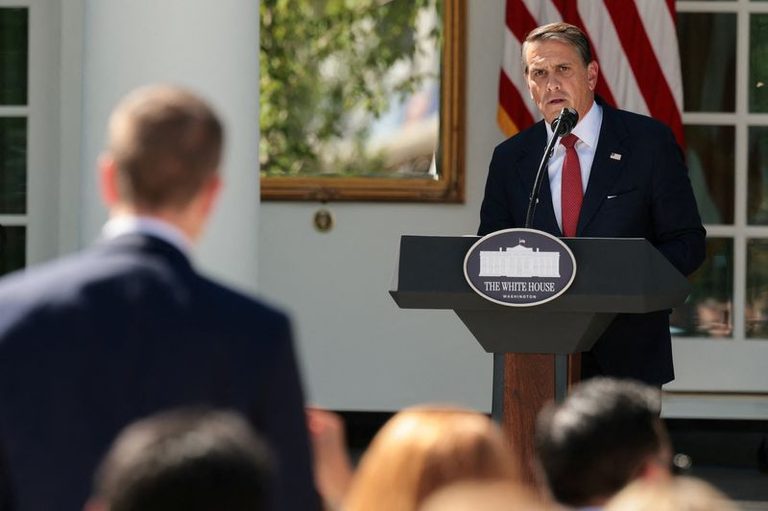
In a brief press briefing at the White House on Tuesday, Attorney General Todd Blanche affirmed the Justice Department’s commitment to uphold the rule of law in the rapidly evolving field of artificial intelligence. Blanche said the department will investigate “anybody associated” with AI who violates criminal statutes, underscoring that existing criminal laws already cover many AI‑related activities.
Enforcement, not regulation
When asked whether the Justice Department would take on a regulatory role for AI, Blanche responded firmly that it is not the agency’s purpose. “As far as AI is concerned, there’s a lot of criminal laws,” he explained. “So if anybody associated with AI violates criminal law, we’ll investigate that.” This stance aligns with the administration’s broader philosophy of limiting government overreach while ensuring that illegal conduct is prosecuted.
Why the focus on criminal law?
AI technologies are being integrated into everything from finance to healthcare, creating new opportunities for both innovation and misuse. While Congress and federal agencies continue to explore policy frameworks, Blanche’s remarks make clear that the Justice Department will rely on the existing criminal code to address wrongdoing, whether it involves fraud, cyber‑attacks, or other illicit behavior tied to AI systems.
Implications for businesses and developers
For companies and developers working with AI, the message is straightforward: compliance with existing criminal statutes remains essential. The Justice Department’s approach does not introduce new regulatory burdens, but it does signal that violations will be pursued aggressively. This reinforces the administration’s commitment to protecting American citizens and businesses from illegal activity without stifling legitimate technological progress.
Administration’s broader AI strategy
Blanche’s comments fit within the Trump administration’s overall strategy of fostering innovation while safeguarding the public. By focusing on enforcement rather than regulation, the administration seeks to preserve the entrepreneurial spirit that drives AI advancement, while still holding accountable those who break the law.
Looking ahead
The Justice Department’s stance suggests that future AI‑related investigations will be grounded in established criminal law, with the agency ready to act when evidence of wrongdoing emerges. Stakeholders are encouraged to stay informed about relevant statutes and ensure their AI applications operate within legal boundaries.
Original reporting: Appleton, WI News Feed (HLL/CB) — read the source article.