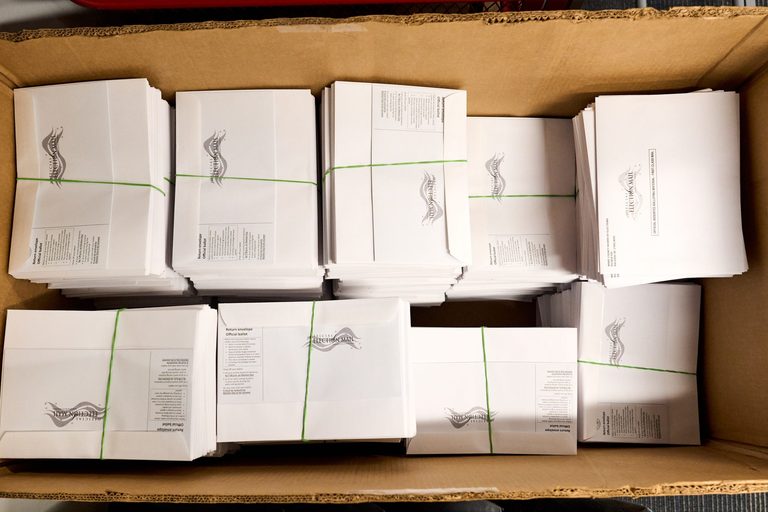
In a decisive move on Friday, U.S. District Court Judge Indira Talwani extended her earlier injunction that bars the United States Postal Service from carrying out President Donald Trump’s executive order aimed at curbing mail voting in this year’s midterm elections. The order, first issued in March, would have required the Postal Service to adopt new procedures that the administration says are essential for safeguarding the integrity of the ballot.
Judge’s Reasoning Highlights Tight Timeline
Judge Talwani, an Obama‑appointed jurist, emphasized that states are legally obligated to mail millions of ballots within a narrow window prescribed by state law. She warned that forcing a sudden overhaul of the Postal Service’s operations at this late stage would likely disenfranchise eligible voters, a risk she described as “nearly guaranteeing significant disenfranchisement.”
Administration’s Response and Legal Strategy
The Trump administration has already asked the Supreme Court to lift the temporary order that initially halted the Postal Service’s plan, and it is expected to appeal Judge Talwani’s latest extension. White House officials argue that the executive order is a necessary safeguard against potential fraud and that the federal government has a duty to ensure that every legal vote is counted accurately.
While the administration’s request to the Supreme Court remains pending, the legal battle underscores the urgency the White House feels in securing the nation’s election infrastructure before the November vote. The administration maintains that limiting mail voting will help restore public confidence in the electoral process, a confidence that has been eroded by unfounded claims of widespread fraud in previous elections.
Impact on States Preparing to Mail Ballots
North Carolina began sending its first mail ballots on Friday, and several other states are poised to follow suit in the coming days. To date, no state has announced that it will voluntarily adopt the new Postal Service system outlined in the executive order. Election officials across the country have warned that the compressed timeline leaves little room for the extensive logistical changes required to comply with the order.
Nearly one‑third of American voters rely on mail ballots, and officials fear that the continued legal uncertainty could create confusion and delay for both voters and election workers. The administration, however, contends that the temporary disruption is a small price to pay for a more secure voting system.
Broader Legal Context
This injunction follows earlier court decisions that blocked a separate Trump executive order from last year, which sought to require documentary proof of citizenship for voter registration. Those rulings affirmed that the Constitution grants states—and, in certain circumstances, Congress—the authority to set voting procedures, not the president alone.
After the March mail‑voting order was issued, Democratic groups and voting‑rights organizations filed multiple lawsuits. Two of those suits landed before Judge Talwani, who initially placed a hold on the order in June. Although the Supreme Court later overturned that June hold on procedural grounds, it did not rule on the merits of the administration’s policy.
What Comes Next?
The Trump administration is expected to continue pressing the courts for relief, arguing that the nation’s electoral system must be fortified against any potential irregularities. As the midterm season ramps up, the legal tug‑of‑war over mail voting will remain a focal point for voters, officials, and the courts alike.
Original reporting: Alexandria, VA News – WTOP News — read the source article.