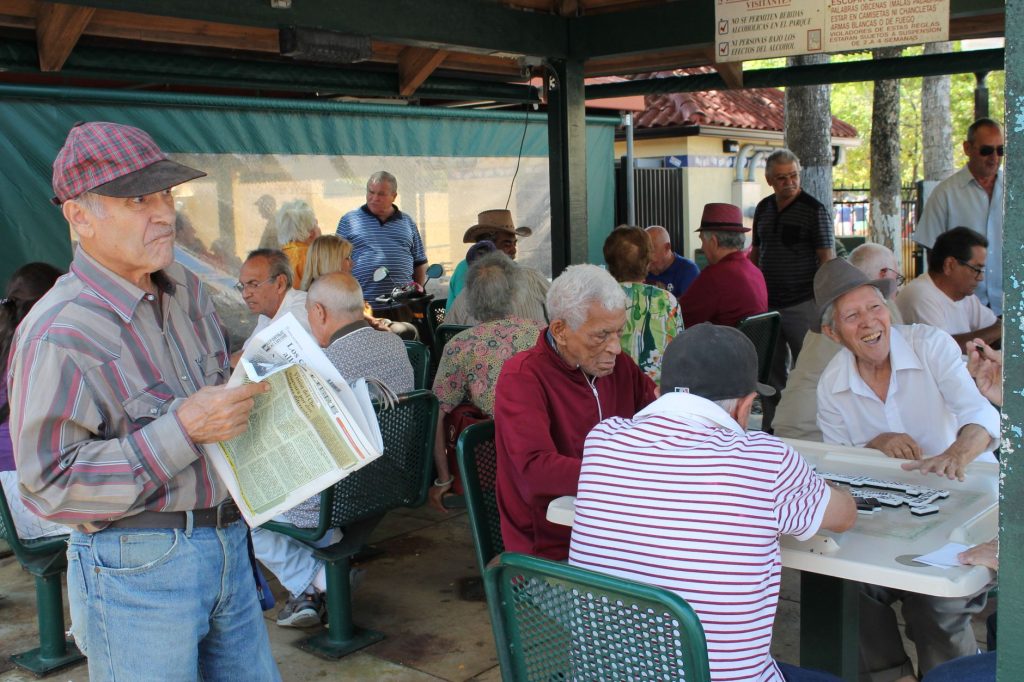
Let me set the scene for you. It is a Tuesday afternoon — not a weekend, not a holiday — and a cluster of men in guayaberas are engaged in what might be the most intensely focused game of dominoes you have ever witnessed. A transistor radio crackles with a bolero. Two old friends argue, laugh, and argue again in rapid-fire Spanish. The smell of café cubano drifts in from a nearby ventanilla. You are not in Havana. You are at Maximo Gomez Park, better known as Domino Park, and it is one of the most alive corners in all of Miami.
Tucked along SW 15th Avenue just off the legendary Calle Ocho corridor in Little Havana, Domino Park has been a daily gathering place for Miami’s Cuban exile community since 1976. The city formalized the space with a pergola, painted murals, and a handful of tiled domino tables, but the soul of the place was never manufactured — it arrived with the people who claimed it as their own. For decades, this small, open-air park served as a de facto living room, town square, and debating floor rolled into one. That tradition has not faded. It has deepened.
When you walk through the low iron gate, you immediately sense that you have stepped into something that belongs to someone. That is not a reason to hesitate — locals here are famously welcoming to curious visitors, especially those who come with genuine respect and open eyes. Pull up a spot along the fence or take a seat on one of the benches and just watch. The domino games are not casual. Players slam tiles with theatrical flair, call out in Spanish, and occasionally gesture to the sky as though appealing to a higher authority on the rules. It is competitive, communal, and utterly captivating.
The park itself is modest in size — you could walk its perimeter in two minutes — but that compression is part of the charm. Colorful murals pay tribute to Cuban history and heroes. A painted rooster, a symbol of Little Havana, greets you near the entrance. The whole place feels like a pocket of preserved time, a deliberate antidote to Miami’s relentless forward momentum.
Pair your visit with a walk along the surrounding block. The ventanillas — small walk-up windows — at nearby cafes serve espresso and croquetas for practically nothing. Street vendors sell fresh coconut water and handmade cigars. On weekends, the cultural energy amplifies considerably: live music spills out of nearby restaurants, and the sidewalks fill with families, tourists, and regulars who are impossible to tell apart.
There is no admission fee. There is no app to download. You simply show up, slow down, and let Maximo Gomez Park remind you that the best travel experiences are often the ones that ask nothing from you except your presence and your attention. Come on a weekday if you can — the unhurried pace makes it easier to linger, and lingering is exactly what this place was built for.