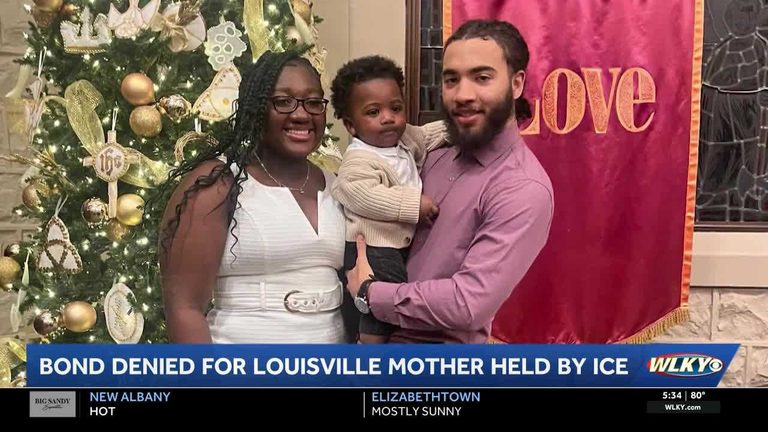
Louisville, Ky. – A federal judge on Tuesday denied bond for 21‑year‑old Armelle Bondonga, a mother of a young child who remains in ICE custody. The court cited a lack of jurisdiction to grant release, effectively keeping Bondonga detained while her immigration case proceeds.
Background and detention
Bondonga was taken into custody by Immigration and Customs Enforcement (ICE) in August during what was supposed to be her final green‑card interview. According to ICE, she entered the United States from the Democratic Republic of the Congo in 2013 and subsequently overstayed her visa. Her attorneys say she was listed as a dependent on her father’s asylum application, a detail that has not yet been resolved by immigration officials.
Court ruling and next steps
The federal court’s decision to deny bond was based on procedural grounds, specifically the judge’s view that the court lacked authority to order her release. Bondonga’s lawyer, who declined to be named, said the team will continue to pursue every legal avenue to secure a fair hearing and eventual release. “We are not giving up,” the attorney said, emphasizing that the fight for Bondonga’s freedom will persist.
Impact on the family and community
Bondonga’s husband has publicly pleaded for his wife’s release, describing the detention as a “void in our home.” The family’s situation has drawn attention from local faith leaders and community advocates who argue that the case highlights broader concerns about immigration enforcement affecting families in Louisville.
Local churches and nonprofit groups have offered support, providing meals and legal assistance to the family while they navigate the complex immigration system. The case underscores the challenges faced by many immigrant families who risk separation when a parent is detained by federal authorities.
Legal context
Immigration detention cases like Bondonga’s often hinge on the interplay between federal immigration law and the rights of individuals to challenge their detention in court. While ICE has the authority to detain individuals pending removal proceedings, courts can set bond if they determine the detainee is not a flight risk or a danger to the community. In this instance, the judge’s claim of lacking jurisdiction halted that possibility.
Legal experts note that the outcome may be appealed, and that higher courts have sometimes reversed lower‑court decisions denying bond, especially when family ties and humanitarian concerns are presented.
What’s next?
Bondonga’s legal team plans to file a motion for a bond hearing in a different jurisdiction, arguing that the current court’s lack of jurisdiction should not prevent a fair assessment of her case. Meanwhile, the family continues to rely on community support as they await further developments.
The situation remains a focal point for local immigration advocacy groups, who see it as an example of the need for clearer, more compassionate policies that protect families while upholding the rule of law.
Original reporting: WLKY Louisville — read the source article.