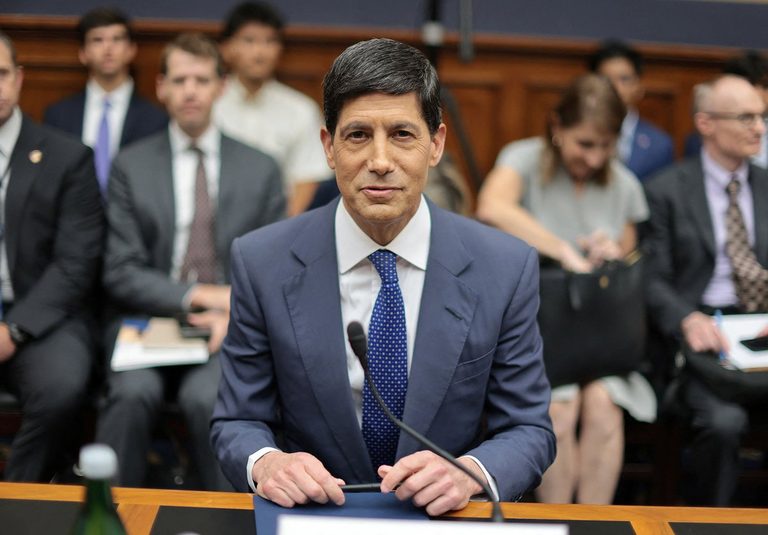
Federal Reserve Chairman Kevin Warsh testified before the House Financial Services Committee on Tuesday, discussing the central bank’s efforts to bring inflation under control and his plan to establish five task forces to review factors affecting monetary policy.
Monetary Policy Report
Warsh appeared before the committee to deliver the Fed’s semiannual Monetary Policy Report, a routine overview of the central bank’s affairs in recent months. He is scheduled to appear before the Senate Banking Committee on Wednesday.
Warsh repeated many of the themes from his first news conference last month, after officials voted to hold their benchmark lending rate steady for the fourth consecutive meeting. He also provided new details on how the task forces will present their findings and discussed the potential economic impact of AI.
Task Forces and Monetary Policy
Warsh announced that the task forces will study and give recommendations on improving communications, balance sheet policy, economic data, productivity and jobs, and inflation frameworks. He said the task forces will share their findings with the decision makers, who are the 19 members of the Federal Open Market Committee, and then he will present the findings to the public.
Warsh also explained that any proposed policy changes to the Fed’s $6.7 trillion balance sheet will be telegraphed to the public before any actual changes are made. He said the Fed is revisiting its approach to quantitative easing, a policy that became a major monetary policy tool during the Great Recession.
Independence and AI
Warsh was pressed on his views about the Fed’s political independence and the potential economic impact of AI. He said the Fed is an independent central bank and that he is committed to following the law and the data. He also discussed the potential benefits and disruptions of AI, saying it could lead to increased productivity and wages, but also poses challenges for the economy.
Original reporting: KTVZ (Central Oregon) — read the source article.