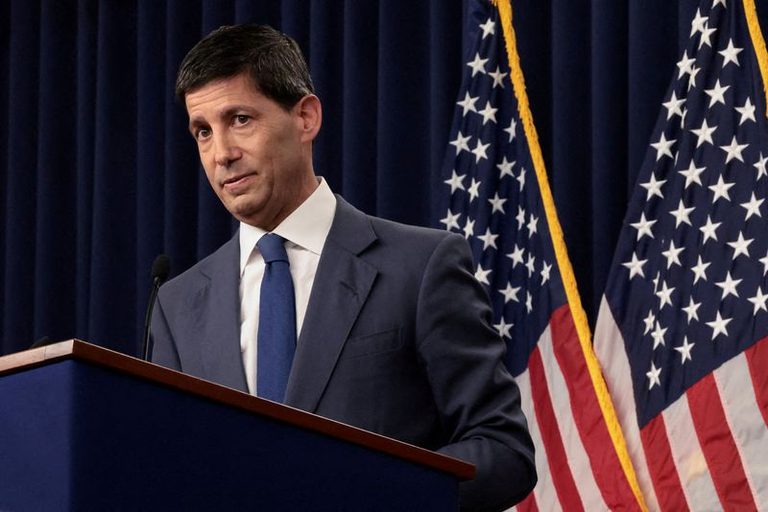
Investors in New York and across the country found cause for optimism on Friday after Federal Reserve Chair Kevin Warsh delivered a decisive speech at the Jackson Hole symposium. Warsh emphasized the Fed’s commitment to lowering inflation to the statutory 2% target and hinted that further rate hikes may be necessary if price pressures persist.
Warsh’s Message to the Market
In his remarks, Warsh said the central bank “has work to do” if policymakers are not confident that underlying inflation is returning to the 2% goal. He noted that current financial conditions do not appear overly restrictive, but he moved closer than before to acknowledging that additional interest‑rate increases could be required to ease price pressures.
Since assuming the chairmanship several months ago, Warsh has pledged to simplify the Fed’s communications, ending forward guidance that previously hinted at a specific rate path. The speech reinforced that shift, focusing instead on the broader objective of price stability.
Market Reaction
The U.S. Treasury two‑year yield rose to 4.34%, its highest level in a month, reflecting expectations of a more hawkish stance. The 30‑year Treasury yield held steady at 5.19%, still near a two‑decade high that has kept investors cautious.
Chief market strategist Phil Blancato of Osaic said, “Warsh was certainly clearer than he was in July. We now have a better understanding of where he wants inflation to go, but relatively little guidance on what combination of inflation and labor market data would cause the Fed to act.”
Rate‑Hike Odds Rise
Fed funds futures indicated a 57% probability of a rate increase at the September meeting, up from 35% before Warsh’s remarks. Nonetheless, some investors remain unconvinced that a hike is inevitable. Michael Arone, chief investment strategist at State Street Investment Management, cautioned, “I still think there’s plenty of room here for him to operate. I haven’t concluded that they’re going to raise rates.”
Uncertainty Over the Fed’s Reaction Function
Analysts noted that while Warsh reduced ambiguity around the inflation target, he offered limited detail on how the Fed will respond to future data. “He reduced ambiguity around the Fed’s preferred inflation target, stressed the role of short‑term interest rates in transmitting policy and avoided any suggestion of leaning on markets to do the job,” said Karl Schamotta, chief market strategist at payments firm Corpay.
Yet, Sonu Varghese, global macro strategist at Carson Group, expressed a desire for more clarity: “I would have liked a little more explanation of that reaction function.”
Looking Ahead
All eyes now turn to upcoming economic releases, beginning with the August jobs report next Friday and the consumer‑price index the following week. As Schamotta put it, “The stakes ahead of the August payrolls and inflation reports are now very high.”
Warsh also announced the formation of task forces to review the Fed’s balance‑sheet usage, data selection, and overall framework for tackling inflation, signaling a willingness to adapt the institution’s tools as conditions evolve.
Original reporting: Appleton, WI News Feed (HLL/CB) — read the source article.