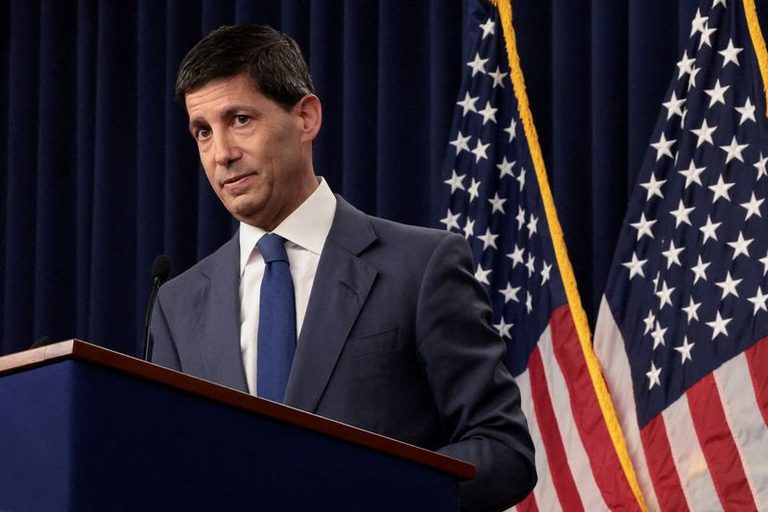
Washington – Federal Reserve Chairman Kevin Warsh is set to deliver his debut keynote at the annual Jackson Hole symposium in Wyoming this Friday. Traders and analysts say the speech carries extra weight because bond yields have risen sharply and Treasury Secretary Scott Bessent has recently intervened in the market.
Market backdrop
Bond markets have been jittery, with U.S. Treasury yields climbing after a series of data releases showed inflation running above the Fed’s 2% target for more than five years. The higher yields have raised concerns that the Federal Open Market Committee may need to raise the policy interest rate faster than previously expected to preserve the central bank’s credibility.
Economist Adam Posen of the Peterson Institute warned that both the bond market and the FOMC have “woken up” to a new reality of higher inflation and a likely multi‑year uptrend in interest rates. He urged Warsh to focus on current data and the committee’s assessment rather than long‑term philosophical ideas.
Fed’s internal dynamics
Warsh has indicated he will wait for recommendations from five task forces created earlier this spring before outlining detailed policy plans. However, minutes from the July 28‑29 meeting reveal that some Fed officials worry waiting to hike rates could force steeper, more costly increases later, while others fear prolonged inflation could erode public confidence in the Fed’s commitment to its target.
Former Fed Chair Ben Bernanke’s earlier description of a “global savings glut” has shifted, according to analysts, into a “global savings squeeze” driven by rising government debt, aging populations, strained trade routes, and booming private investment in artificial intelligence.
Treasury’s role
Recent Treasury actions, including Bessent’s market intervention, have added a new variable. While the Fed’s primary tool remains the overnight interest rate, widening gaps between that rate and short‑term government debt rates could complicate monetary management. Former New York Fed official Krishna Guha noted that activist Treasury policy now plays a material role alongside central bank decisions.
Guha also highlighted Warsh’s unconventional stance that the Fed should step back and let the market shape the yield curve, while hinting that tightening at the long end of the curve might be preferable to short‑term tightening. Investors, however, see Treasury moves as an attempt to manage long‑term yields, challenging Warsh’s preferred approach.
Political scrutiny
Democrats on the Senate Banking Committee have requested details about Warsh’s communications with President Donald Trump after a Wall Street Journal report suggested regular calls between the two. While Trump has not publicly criticized Warsh for not cutting rates, the president’s past demands for lower rates from former Chair Jerome Powell add pressure on the new Fed chief.
Warsh’s reluctance to provide forward guidance has left markets and lawmakers questioning whether he is holding back on rate‑hike signals to avoid displeasing the administration.
Looking ahead
With U.S. midterm elections approaching, the political environment remains charged. Former IMF chief Maurice Obstfeld said the bond market’s behavior reflects concerns about the Fed’s next steps and the potential need for steeper rate increases if inflation stays above target.
Warsh’s Jackson Hole speech therefore represents a critical moment for the Fed to clarify its assessment of the economy, its view of inflation risks, and how it will coordinate—or distance itself—from an increasingly active Treasury Department.
Original reporting: Appleton, WI News Feed (HLL/CB) — read the source article.