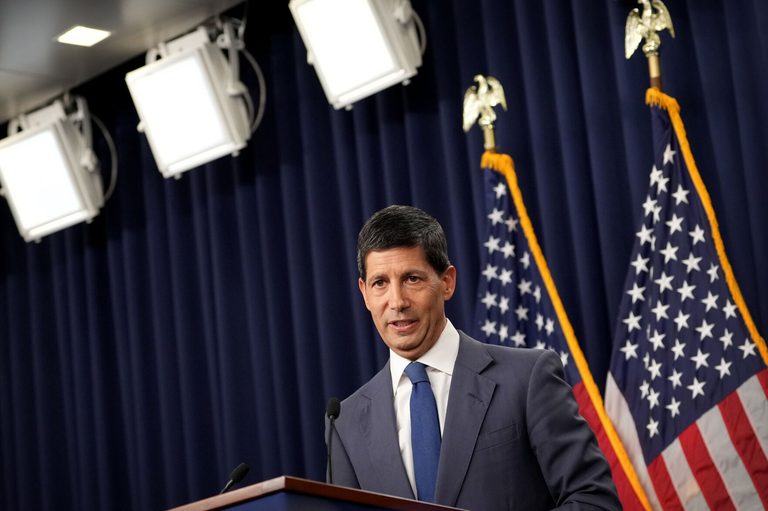
Washington – As the Jackson Hole Economic Symposium approaches, Federal Reserve Chair Kevin Warsh is under growing pressure to explain his approach to inflation and interest‑rate policy. The scrutiny comes from President Donald Trump, who appointed Warsh, as well as from economists and Wall Street analysts who say the chair’s recent silence has left markets uneasy.
Why the call for clarity matters
Warsh’s communication style marks a sharp departure from his predecessors. He has deliberately avoided providing the forward guidance that investors traditionally rely on, arguing that such guidance limits the Fed’s flexibility. While that stance reflects a desire to keep policy options open, many market participants argue that a basic framework – even without specific forecasts – would help stabilize expectations.
“What he needs to do is clarify the conceptual framework he’ll bring to directing monetary policy,” said David Wilcox, senior fellow at the Peterson Institute for International Economics. “He’s refused to provide even that amount of illumination.”
Recent market reactions
Warsh’s last press conference on July 29 saw interest rates rise, pushing mortgage borrowing costs higher after the Fed kept its benchmark rate unchanged. Gennadiy Goldberg, head of U.S. rates strategy at TD Securities, noted, “Warsh effectively lost markets when he was speaking. He kept talking about bringing inflation down, yet he didn’t really have an answer when asked how.”
When pressed about the metric he would use to gauge progress toward the Fed’s 2% inflation target, Warsh cited the personal consumption expenditures price index – the Fed’s current preferred measure – but hinted that the metric could change after task‑force recommendations.
President Trump’s involvement
President Trump has repeatedly called for lower interest rates, defending Warsh while criticizing other Fed officials who appear to favor higher rates. The president also continues his effort to remove Fed governor Lisa Cook, a Biden‑appointed member, arguing that a full Trump‑appointed board would better reflect his economic vision.
Diane Swonk, chief economist at KPMG, wrote, “Politics are adding to the Fed’s credibility problems. That is why his speech later this month matters so much. It is an opportunity for Warsh to demonstrate his and the Fed’s independence from political interference.”
Potential policy directions
Warsh has hinted that higher rates could be part of the solution to stubborn inflation, but he stopped short of committing to a specific path. Some analysts suggest he may also consider reducing the Fed’s large holdings of Treasury securities, a move that could raise longer‑term borrowing costs over time.
Economists say that a clearer statement – even a modest one – could calm markets and potentially ease the upward pressure on long‑term yields. Derek Tang of Monetary Policy Analytics summed up the sentiment: “I think just yields not rising would be a victory.”
What’s at stake for Americans
Inflation remains above the Fed’s 2% target, and surveys show that the cost of essentials such as gas, groceries, and housing continues to be a top concern for voters heading into the midterm elections. A more transparent Fed approach could help families plan their finances with greater confidence.
Warsh’s upcoming remarks will be closely watched for any indication of how the Fed intends to balance price stability with economic growth, and whether the central bank will maintain its current stance or shift toward more aggressive rate adjustments.
Original reporting: KTBS 3 (Shreveport) — read the source article.