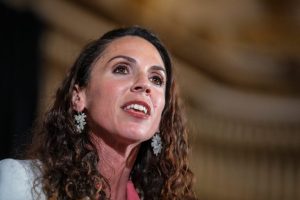
Boston, MA – In an interview with the Associated Press, Susan Collins, president of the Federal Reserve Bank of Boston, said the resurgence of combat in Iran was a major reason she supported the Federal Reserve’s recent decision to lift its benchmark interest rate by a quarter‑point to roughly 3.9%.
Geopolitical pressure adds to inflation worries
Collins explained that she “did not see the inflation progress I was hoping to see,” and that “geopolitical developments suggest we could continue to see additional pressures push on the energy side.” She warned that the war in Iran raises the likelihood that inflation could remain stuck above the Fed’s 2% target, a level the central bank has not achieved for more than five years.
Regional business concerns echo national trends
Businesses in the New England district – covering Massachusetts, Connecticut, Maine, Rhode Island and Vermont – continue to voice concerns about high costs. Many expect they may have to pass rising expenses on to customers, which could further lift measured inflation.
Other Fed officials echo the sentiment
Collins was the second Fed official on Monday to discuss the rate decision, joining Austan Goolsbee, president of the Chicago Fed. Goolsbee also highlighted supply‑side shocks, including higher oil prices from the Iran conflict and tariff impacts, as drivers of stubborn inflation.
While Goolsbee noted that the Fed would normally wait for such shocks to fade, he said the persistence of these pressures leaves the central bank “little choice but to hike rates.” He added that raising rates is intended to curb consumer and business demand, bringing inflation back toward the 2% goal, even if it means short‑term pain for the labor market.
Contrasting views within the Fed
Fed Chairman Kevin Warsh, however, has cautioned against harming the labor market to achieve price stability. Warsh said he does not believe the Fed needs to “do harm to the labor markets to achieve our objective.”
Collins, who does not have a voting right on rate decisions until 2028, and Goolsbee, who will gain a vote next year, both participate in the policy‑setting meetings and help shape the discussion.
Historical context and future outlook
Historically, rate hikes have slowed growth and sometimes triggered recessions. Yet the aggressive tightening of 2022‑2023 succeeded in lowering inflation without a sharp rise in unemployment. Analysts note that ongoing supply shocks, such as the Iran conflict and rising oil prices, could require another modest increase later this year.
Collins expects the Fed to keep rates unchanged throughout next year, provided inflation moves closer to target. Goolsbee suggested that if future data show inflation is driven more by demand than supply, a single additional hike might be sufficient; otherwise, further action could be needed.
The Fed’s stance underscores the delicate balance between curbing price pressures and preserving employment, a trade‑off that will shape monetary policy decisions for the remainder of the year.
Original reporting: Dallas TX News (HLL/CB) — read the source article.