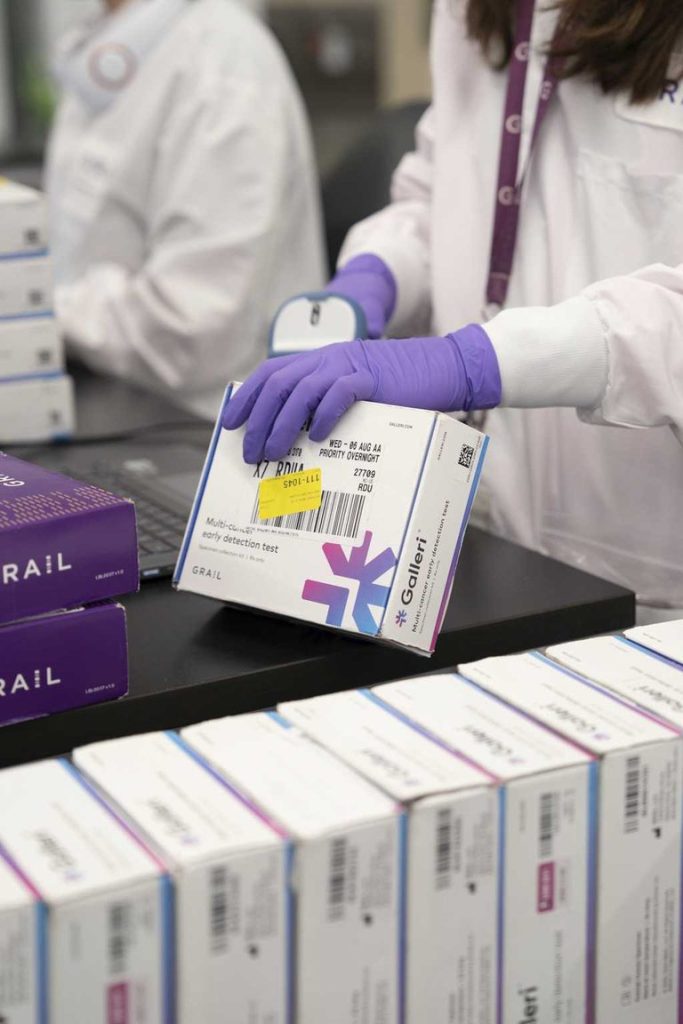
The Food and Drug Administration’s advisory panel voted 7‑2, with one abstention, to recommend Grail Inc.’s Galleri blood test for use in adults age 50 and older. The panel concluded that the DNA‑based test offers more potential benefits than risks, but members stressed that critical questions about its performance remain unanswered.
How the test works
Galleri does not diagnose cancer. Instead, a single blood draw looks for DNA signals that may indicate the presence of one of more than 50 tumor types, including many for which no standard screening exists, such as liver and ovarian cancers. A positive result would trigger follow‑up imaging and diagnostic procedures to confirm whether cancer is present.
Panel’s concerns
Panelists highlighted several uncertainties. The test missed two of three cancers that were diagnosed in the year after testing in Grail’s pivotal study, raising concerns about false reassurance. It also performed less accurately for early‑stage cancers, the stage at which treatment is most effective. Moreover, Grail has not yet provided data showing that screening with Galleri reduces cancer‑related deaths, a metric that would require years of follow‑up.
Dr. Victor van Berkel of UofL Physicians in Louisville, Kentucky, cautioned, “Perhaps my ‘yes’ is hopeful rather than accurate. If we can find more early‑stage cancers in the population that we can’t screen for currently, that will end up having benefit.”
Potential benefits
Supporters argue the test could fill a gap in current cancer‑screening recommendations, which largely focus on single‑organ tests such as mammograms and colonoscopies. Grail’s own study of 140,000 older adults reported that the test detected about one‑third of cancers diagnosed over a one‑year period, and two‑thirds of those with a “cancer signal detected” were later confirmed to have cancer.
Dr. Mylynda Massart of the University of Pittsburgh, speaking for Grail, said, “Patients want opportunity, they want options. They want the chance to fight their disease while the chance to survive is possible.”
Next steps
The panel’s recommendation is not binding. The FDA will consider the advice as it prepares a final decision, expected in the coming months. If approved, the test could become covered by Medicare and private insurers, expanding access beyond the current out‑of‑pocket cost of $700 or more.
Consumer advocates warned that a negative result might give patients a false sense of security, potentially delaying follow‑up for symptoms. Diana Zuckerman of the National Center for Health Research said, “When they start having symptoms there will be a tendency to delay going to the doctor — just a little bit — and that could be deadly.”
What patients need to know
Experts emphasized that Galleri should be used in addition to, not as a replacement for, existing cancer‑screening guidelines. A negative result does not guarantee the absence of cancer, and further research is needed to confirm whether the test improves outcomes compared with established screenings.
Original reporting: WLKY Louisville — read the source article.