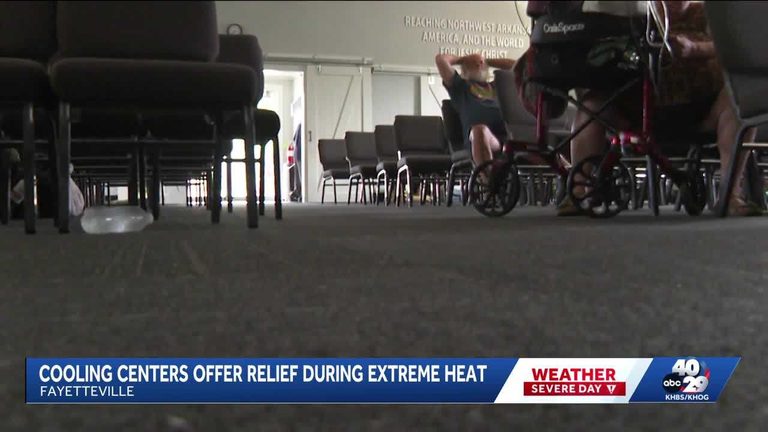
Extreme heat continues to grip Northwest Arkansas, and the City of Fayetteville has responded by operating a network of cooling centers for residents seeking relief. The centers, which opened during the late‑July heat emergency, remain available through August 31 as temperatures stay dangerously high.
Cooling center locations and services
One of the most frequented sites is the cooling center at Rooted City Center. Open daily from 10 a.m. to 7 p.m., the center provides free access to drinking water, electrolyte drinks, snacks, sunscreen and cooling towels. No registration or advance sign‑up is required, allowing anyone in need to walk in at any time.
Resident experience
Xavier Ruppert, a recent transplant from Florida, has relied on the centers for about a month. After losing a job and needing temporary housing, Ruppert said the heat took a physical toll, describing sunburns that can reach third‑degree severity. “For someone who stays in the heat all the time, your body hurts a lot,” he explained. “If we didn’t have these cooling centers, you’d find us laying on the street, passing out.”
Ruppert highlighted that the centers give him a place to cool down, eat a snack and simply rest away from the scorching sun. He emphasized that the facilities are especially vital for individuals who lack alternative shelter or air‑conditioned spaces.
How to find current locations
The City of Fayetteville maintains a Hot Weather Readiness Guide that lists all active cooling center locations and hours. Residents can consult the guide online for the most up‑to‑date information. The guide also notes that additional centers may be added if heat conditions worsen.
Public health context
Health officials warn that prolonged exposure to high temperatures can lead to heat‑related illnesses, dehydration and severe skin damage. By offering free water, electrolytes and shade, the cooling centers aim to reduce the risk of emergency room visits and protect vulnerable populations, including the elderly, children and those experiencing homelessness.
City leaders stress that the cooling centers are a temporary public‑health measure, not a permanent solution to housing insecurity. Nonetheless, they remain a critical resource while the region endures one of the hottest summers on record.
Looking ahead
The city plans to keep the centers open through the end of August, with the possibility of extending operations if extreme heat persists. Residents are encouraged to stay informed through the Hot Weather Readiness Guide and to use the centers whenever they feel unsafe in the heat.
Original reporting: 40/29 / KHBS (NW Arkansas) — read the source article.