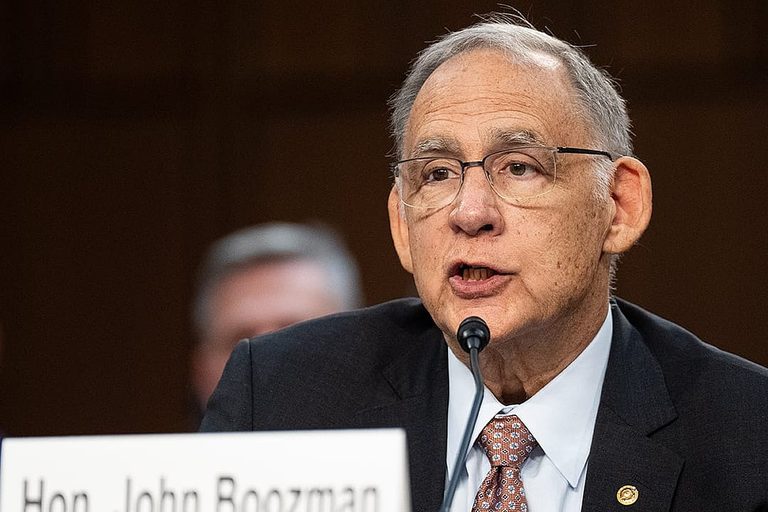
Senate Agriculture Committee Chairman John Boozman (R‑AR) led a markup hearing on his version of the farm bill on Aug. 6, but the effort fell short. Republicans could not muster enough votes, and the measure was defeated 10‑11 after two GOP senators—Tommy Tuberville (R‑AL) and Mitch McConnell (R‑KY)—were absent.
Why the farm bill matters for broadband
Beyond its well‑known roles in crop insurance, commodity supports, and SNAP, the farm bill governs a broad swath of rural policy, including conservation, farm credit, water infrastructure, forestry and energy. A key component is the USDA’s ReConnect program, which has provided over $4.4 billion in loans and grants for rural broadband since 2018.
The House version, passed in April by a narrow 224‑200 margin, would extend ReConnect funding through 2031 but sets minimum speeds at 50 Mbps download and 25 Mbps upload, limiting eligibility to areas lacking 25 Mbps download and 3 Mbps upload. Critics argue those thresholds would lock many rural communities into sub‑par service.
Senate’s more ambitious proposal
The Senate draft seeks to make ReConnect permanent and raises speed requirements while broadening eligibility. At a prior committee hearing, Jesse Shekleton, director of Broadband Operations at Jo‑Carroll Energy, urged higher standards, noting that “demands for bandwidth on farms will continue to grow.”
Both chambers would codify technical assistance for rural broadband planning and prevent ReConnect from overlapping the Broadband Equity, Access, and Deployment (BEAD) grant program administered by the U.S. Commerce Department.
Funding tug‑of‑war
The USDA’s FY 2027 budget request proposed canceling $40 million in unused ReConnect funds, but House appropriators restored the money in April—an uncommon instance of Congress overruling an agency’s own budget plan. Meanwhile, BEAD funding is now flowing, prompting some to call for eliminating duplicate USDA programs.
Rural broadband’s economic impact
Panelists at the recent Broadband Breakfast Live Online discussion emphasized that broadband is now a prerequisite for rural prosperity. A Center for Rural Innovation study cited by Bartlett Cleland of the Innovation Economy Alliance found well‑connected counties enjoy 18 % higher per‑capita income and roughly 210 % higher business growth than underserved peers.
Industry voices, including Conexon co‑CEO Jonathan Chambers, highlighted the role of electric cooperatives in deploying fiber alongside existing pole infrastructure, though BEAD’s pole‑attachment rules have proven costly for some co‑ops.
Satellite competition and the road ahead
SpaceX’s Starlink, now a public company, is delivering low‑Earth‑orbit satellite internet to many remote areas, prompting questions from cable operators about rural customer loss. While satellite offers a useful supplement, experts note its capacity limits in dense‑use scenarios and reliability concerns compared with symmetrical fiber networks.
The farm bill’s fate will shape how federal resources support rural broadband, influencing everything from farm productivity to family connectivity across America’s heartland.
Original reporting: El Paso News (HLL/CB) — read the source article.