Jackson, Miss. – The family of Nolan Wells, an 18‑year‑old Black college student who died after a July 4 boat outing, is pressing for a full federal investigation. Civil‑rights lawyer Ben Crump announced that a forensic examination of Wells’s cellphone will be released via livestream on Thursday, following the recent release of an independent autopsy report.
Grand jury findings and family concerns
The state grand jury, which reviewed the case last week, declined to recommend any criminal charges. Its written report, which the panel shared with the grand jury but has not made public, concluded that Wells’s death was “consistent with drowning” and that there was no evidence of a fight or altercation on the island.
Wells’s parents and their attorneys, however, remain unconvinced. They point to unanswered questions about the teenager’s phone, which was left on the boat that brought him to the barrier island. The family doubts that Wells would have stayed behind without his phone and worries the device could have been tampered with, noting the absence of any recordings or messages in the hours before he vanished.
Disputed forensic conclusions
Both the official autopsy and the independent autopsy commissioned by the family listed an undetermined cause of death and noted unexplained blunt‑force trauma to the back of Wells’s head. Crump and the parents challenged the grand jury’s assertion that the death was a drowning, arguing that the evidence does not support that conclusion.
A witness testified that Wells slipped off a boat around 3:30 p.m. on July 4 but continued to socialize afterward, showing no obvious injury. The panel said it could not determine whether that fall caused the bruising observed on Wells’s body, and it noted the bruising was not a fatal injury.
Calls for federal involvement
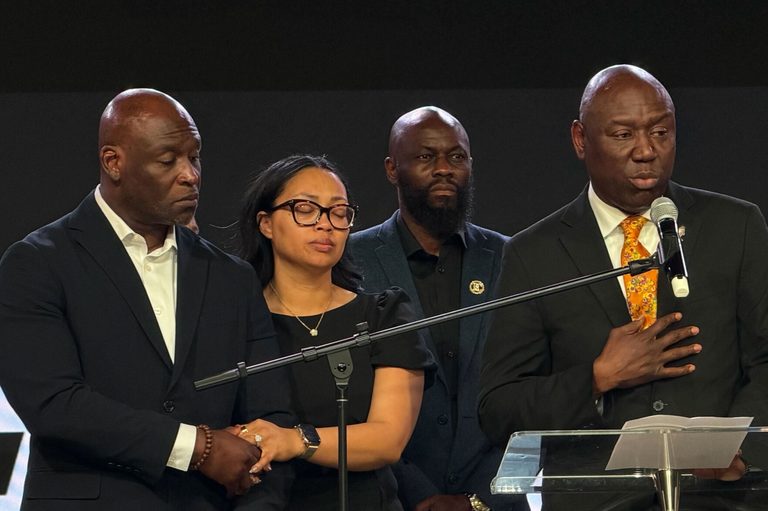
At a news conference, Wells’s mother, Christine Wonsley, joined Crump and NAACP representatives in urging the U.S. Justice Department to conduct an independent investigation. The grand jury report acknowledges that federal law‑enforcement agencies were involved in the case, but it does not clarify the extent of their participation.
“What we have learned is that we still have no answers,” Wonsley said. “And the report reinforced the fact that Nolan was not given a thorough, transparent and honest investigation.”
Next steps
Crump’s livestream of the cellphone forensic report is scheduled for Thursday, offering the public a chance to review the technical findings. The family hopes the release will pressure federal authorities to step in and ensure a comprehensive, impartial inquiry.
The case continues to draw national attention, highlighting ongoing concerns about racial equity and law‑enforcement transparency in the Deep South.
Original reporting: KTBS 3 (Shreveport) — read the source article.