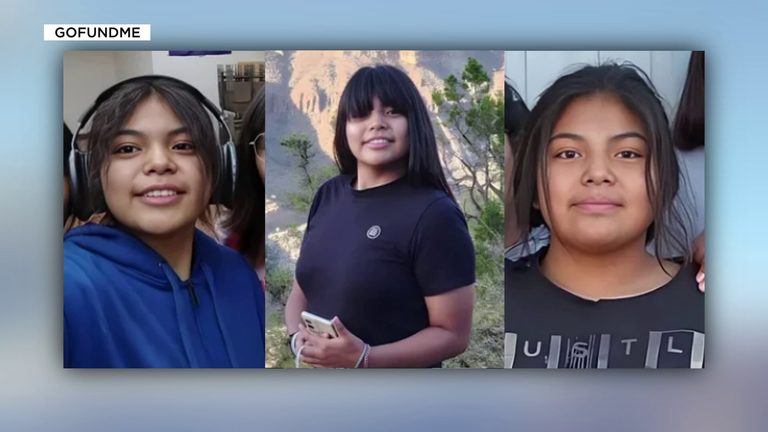
WHITERIVER, AZ — A year after the tragic death of 16‑year‑old Tia Colelay, her family remains without closure. Tia’s body was discovered near Knots Landing on the Fort Apache Indian Reservation in November 2025, but investigators have provided few new details.
Family’s ongoing search for answers
“Today is the day that we all lost contact with her last year,” said Eileen Kessay, Tia’s godmother, during a recent interview. The family’s last communication from the Bureau of Indian Affairs (BIA) came in August, when officials told them the case had been transferred to authorities in Washington, D.C., and that a resolution could take years.
Kessay described a pattern of diminishing updates: “When this all happened, it was like weekly that they would update us and then it was like every two weeks, bi‑weekly, then it went to every month. And then it went to your case got handed over to somebody else.”
Investigative status
In March, the family was informed that three persons of interest had been identified. As of the one‑year anniversary, no arrests have been made and no new information has been released.
“We don’t want people to forget who she was,” Kessay added, emphasizing the need for continued public awareness.
Advocacy and criticism of federal response
Darlene Gomez, an attorney who specializes in Missing and Murdered Indigenous Women and Relatives (MMIW) cases, said the family’s experience reflects broader systemic failures. “It should not be the community that is requesting and searching. That belongs to the Bureau of Indian Affairs and the FBI,” she said.
Gomez urged the public to see Tia as “just like their own child,” noting her love of the outdoors, family time, and painting.
Federal audit highlights staffing shortfalls
A recent federal audit of the BIA’s Missing and Murdered Unit revealed serious resource constraints. The audit found the unit staffed with only 44 employees out of 65 funded positions, leading to unmanageable caseloads and the diversion of money intended for the unit to other law‑enforcement costs.
While Tia’s family did not lodge a specific complaint about the investigation, they expressed concern about these broader deficiencies.
Memorial events honor Tia’s memory
In accordance with Apache tradition, a three‑day memorial dinner will be held in November to thank those who assisted with the burial process. Kessay explained that the ceremony is a spiritual necessity, allowing the family and participants to share a meal and express gratitude.
A public remembrance walk is scheduled for November 21 at 10 a.m., beginning at the Whiteriver Assembly of God and ending at Time Square. Participants are asked to wear red in solidarity with the MMIW movement and to honor Tia’s life.
Donations to support the memorial dinner can be made through the family’s GoFundMe page.
Broader context
The case underscores ongoing challenges faced by Indigenous communities across the United States in seeking timely and thorough investigations of missing persons. Advocates continue to call for increased staffing, better coordination between federal agencies, and greater transparency.
As the anniversary approaches, Tia’s family hopes that renewed attention will prompt action and ensure that her story is not forgotten.
Original reporting: azfamily KTVK/KPHO Phoenix (news) — read the source article.