The falafel arrives in a small basket lined with wax paper, six rounds of it, each one cracked open along the edge where the crust split in the fryer. You didn’t ask for extra tahini, but a ramekin of it shows up anyway, which tells you something about how Aladdin’s operates. This is a place that’s been quietly doing its thing on Marshall Street since 1990, and the staff moves like people who stopped trying to impress anyone a long time ago — in the best possible way.
Aladdin’s Natural Eatery sits on the edge of the Syracuse University campus, close enough that you half expect the crowd to be all students, but the lunch rush is a reliable mix: professors, hospital workers from Upstate a few blocks over, and regulars who’ve been coming since before some of the undergrads were born. The dining room is simple — wood tones, warm light, nothing loud. You’re not here for the décor.
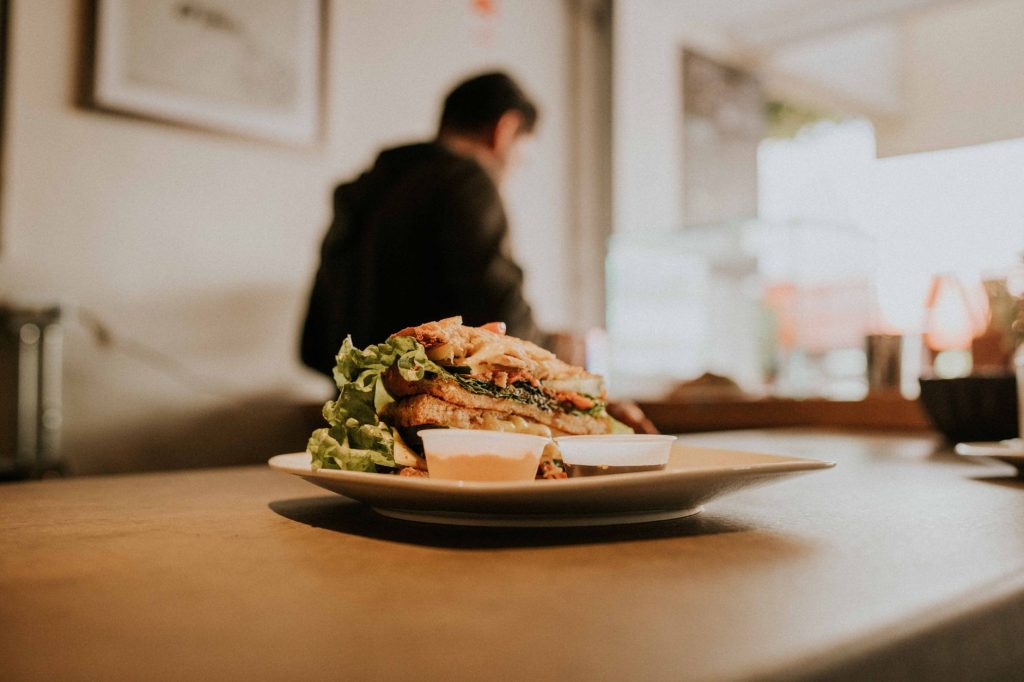
What you’re here for is the mezze. Order the combination plate and you get hummus, baba ghanouj, tabouli, and warm pita that deflates gently when you tear into it. The baba ghanouj at Aladdin’s has a proper smokiness that a lot of places in this city skip, probably because getting it right requires actually charring the eggplant instead of just blending it with sesame and calling it done. It’s the dish that separates the restaurants that care from the ones that don’t.
The owner, George Menikou, has run Aladdin’s long enough that he could tell you stories about every major shift this stretch of Marshall Street has gone through — the boom years, the lean years, the pandemic, the slow rebound. He doesn’t say much to strangers, but if you’re a regular, you’ll eventually get a nod, maybe a question about where you’ve been. That’s the currency here.
For lunch, you’re looking at $12 to $16 for most entrees. The shawarma wrap is popular, tightly packed and not messy in the way a lot of wraps are. The lentil soup, if it’s cold out — and in Syracuse, it’s cold out for a significant portion of the year — is thick and deeply flavored and costs about four dollars. Order it. The spinach pie, flaky and not overly oily, is worth adding on.
Dinner is slower, quieter, and honestly a better time to go if you want to actually sit with a meal rather than eat it in thirty minutes and get back to work. The menu doesn’t change dramatically between lunch and dinner, which is fine, because the menu doesn’t need to. When something is working, you leave it alone.
Aladdin’s is vegetarian-friendly in the way that vegetarian food should be: complete, satisfying, not an afterthought. There are meat options, but the kitchen doesn’t treat the plant-based dishes as secondary. That’s rarer than it should be.
Hours run Monday through Saturday, roughly 11 a.m. to 9 p.m., though it’s worth checking before you go. Parking on Marshall can be rough during the semester, so plan for a short walk. Go in winter when you need something warm and filling and the campus is less chaotic, or go in September when the energy on the hill is high and you want a reliable meal that won’t let you down. Either way, start with the falafel.