When The Who released Who’s Next in 1971, they were emerging from the ambitious but doomed Lifehouse project. Rather than abandon the material, associate producer Glyn Johns salvaged the strongest songs and presented them as a lean, nine‑track album that still feels fresh more than fifty years later.
Four Musicians, One Unstoppable Machine
Roger Daltrey’s thunderous voice, Pete Townshend’s multi‑instrumental prowess, John Entwistle’s melodic bass, and Keith Moon’s chaotic drumming created a band that defied conventional roles. Entwistle often carried the melody, Townshend drove the rhythm, and Moon treated the drums as a weapon rather than a metronome. This upside‑down dynamic gave the record its raw power.
Musical Roots and Influences
Townshend’s spiritual mentor Meher Baba inspired the lyrical themes, but the band’s sound drew from earthier sources: Muddy Waters and John Lee Hooker supplied blues muscle; James Brown contributed rhythmic intensity; Chuck Berry gave the teenage grammar of rock ’n’ roll; Smokey Robinson and the Everly Brothers taught melodic directness; Link Wray showed the expressive potential of distortion; and The Kinks modeled how youthful frustration could be turned into razor‑sharp rock.
Key Tracks that Define the Album
“Baba O’Riley” opens with a Lowrey organ loop that creates a hypnotic electronic pattern before the band erupts, turning a quest for transcendence into forward motion. “Bargain” reduces devotion to a street‑level exchange, while “Love Ain’t for Keeping” offers a brief acoustic respite before the guitars roar again. “My Wife” explodes into comic domestic panic with pounding piano and brass, and “The Song Is Over” captures the tension between escaping the world and finding something worth staying for.
“Going Mobile” answers dystopia with motion, turning escape into freedom. “Behind Blue Eyes” strips back to a vulnerable confession from behind a public mask. Finally, “Won’t Get Fooled Again” builds a relentless synth grind beneath Moon’s furious drumming, culminating in Daltrey’s iconic scream—a protest against political disillusionment.
Why the Album Still Matters
The synthesizers on Who’s Next are not decorative; they become part of the band’s propulsion system, showing how electronic sounds can coexist with rock aggression. This template paved the way for later acts such as The Clash, AC/DC, Guns N’ Roses, Pearl Jam, Green Day, Oasis, and The White Stripes, each borrowing the album’s blend of political alertness and visceral punch.
Cover Art and Legacy
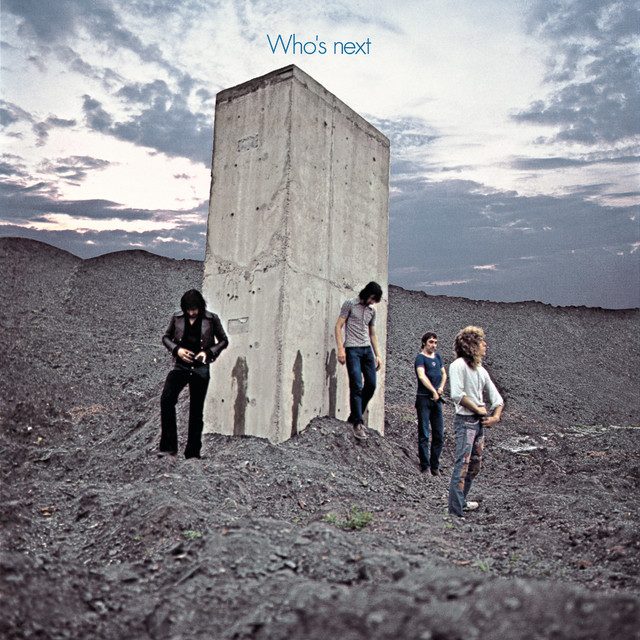
Ethan Russell’s cover photograph shows the four members beside a concrete monolith in an industrial wasteland, apparently relieving themselves against it. The image captures the band’s humor amid an apocalyptic setting—juvenile, absurd, yet strangely monumental.
Listening to Who’s Next in the late afternoon, when daily irritations have piled up, can feel like a cathartic release. Turn the volume up, let the synths and Moon’s drums fill the room, and remember that even when grand visions collapse, the music can still move us forward.
Original reporting: SaportaReport — read the source article.