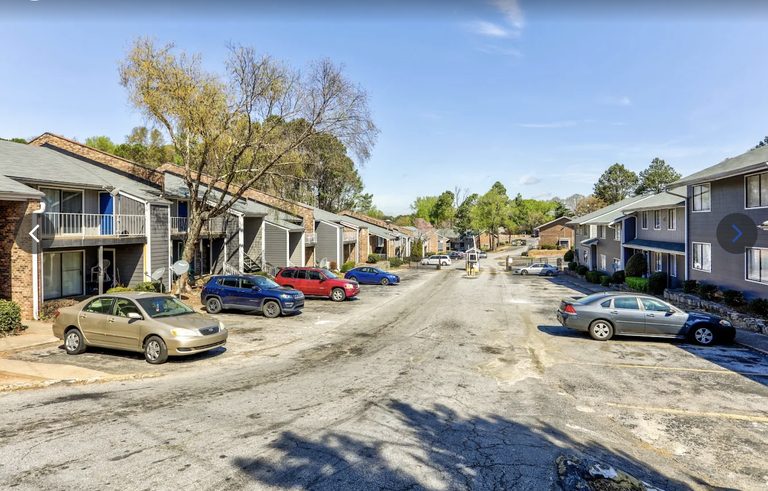
Former owners of the former Chelsea Gardens Apartments have filed a civil suit in Fulton County Superior Court alleging a coordinated effort by College Park officials to cripple their property and steer it to a new developer. The complaint, filed on Oct. 15, names Councilmembers Tracie Arnold and Joe Carn, the city manager, and the city attorney as defendants and seeks nearly $15 million in damages under Georgia’s RICO statute, plus punitive damages and legal fees.
Alleged misuse of code‑enforcement authority
The lawsuit claims that, beginning in spring 2024, city code‑enforcement staff deliberately delayed inspections and withheld certificates of occupancy for vacant units at the complex. By refusing to issue the required permits, the city prevented the owners from leasing the apartments, leaving the units empty and vulnerable to squatters. The complaint says the city also blocked the owners’ request to place courtesy police officers in the vacant units, further allowing the squatter problem to grow.
Financial pressure and foreclosure
According to the filing, the owners received a notice listing hundreds of alleged violations—including citations for a non‑existent swimming pool and demands to replace roofs that had been replaced only seven years earlier. The city allegedly required the owners to deposit $3 million into a city‑controlled escrow account and to use preferred contractors for the repairs.
Facing mounting costs and an inability to rent the units, the owners’ financial condition deteriorated. The suit alleges that Councilmembers Arnold and Carn, along with city staff, made negative public statements about the property to discourage a prospective buyer. The complex ultimately entered foreclosure in February 2025 for $40 million, roughly $15 million below its appraised value a year earlier.
Preferential treatment for the new developer
After the foreclosure, the property was purchased by Contour Development, led by Pete Dedvukaj. The complaint asserts that Arnold and Carn met with Dedvukaj before the city formally condemned the complex in April 2025, a move that forced existing residents to vacate. The new owners reportedly received expedited renovation permits and fee waivers. The lawsuit cites an incident in which Arnold and Carn asked former City Manager Lindell Miller to waive permit fees; Miller refused and was subsequently dismissed after a council motion led by Carn, which Arnold seconded.
The filing also notes that the new owner contributed to Arnold’s political campaign and attended events at the redeveloped property, suggesting a pattern of preferential treatment.
Pattern of selective enforcement
The complaint links this case to earlier allegations of selective code enforcement in College Park. It references a 2025 whistleblower lawsuit filed by former code‑enforcement officer Jerry Silver, who claimed he was fired for refusing to issue improper violations. Silver’s suit alleged that Councilman Roderick Gay directed code violations against properties without legitimate issues. The current lawsuit argues that these incidents demonstrate a broader pattern of using code‑enforcement powers for political or personal gain.
Response from the accused
Councilmembers Arnold and Carn, the city manager, and the city attorney have not returned requests for comment. The plaintiffs, represented by attorneys Cary Wiggins and co‑counsel, have asked the court to consolidate this case with the earlier Silver lawsuit.
Community reaction
Speak Up College Park, a resident‑led watchdog group, posted the lawsuit on its Facebook page, urging transparency and accountability from city officials. Residents who have long complained about mold, rodents, and sewage leaks at the complex hope the legal action will bring greater oversight to the city’s code‑enforcement practices.
The outcome of this case could have significant implications for how College Park handles code‑enforcement, property development, and the relationship between elected officials and private developers.
Original reporting: SaportaReport — read the source article.