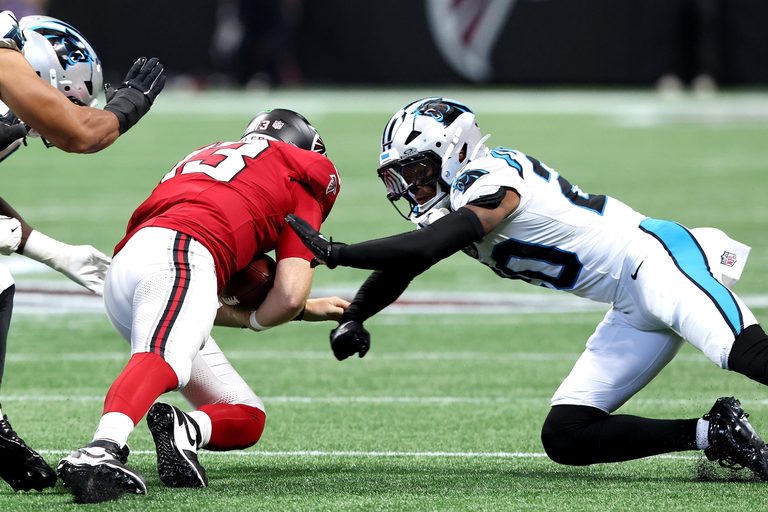
Atlanta fans have a lot to worry about after the Falcons’ first two games. Using the Defense‑adjusted Value Over Average (DVOA) metric, which dates back to 1977, the team’s passing offense posted a rating of -89.2%. That places Atlanta at the fifth‑worst passing DVOA in league history after just two weeks.
How the numbers compare
Only four teams have recorded a worse passing DVOA after two games: the 2002 Houston Texans (-90.0%), the 1978 Tampa Bay Buccaneers (-97.4%), the 1984 Los Angeles Rams (-98.7%) and the 1979 Houston Oilers (103.2%). While the 2002 Texans finished the season 4‑12, the 1984 Rams and 1979 Oilers both reached the playoffs, showing that a poor start does not always dictate the final outcome.
Quarterback performance
Atlanta’s struggles stem largely from the quarterback carousel. Starting quarterback Tua Tagovailoa suffered a back injury in practice before Week 1, forcing third‑string Cooper Rush into the starting role. After Rush also sustained an injury, the team turned to fourth‑string Jack Strand. Both have posted historically low Adjusted Net Yards per Attempt (ANY/A) figures. Rush’s ANY/A sits at 0.9, ranking him last among 32 qualified passers, while Strand’s 0.1 places him just below Rush when non‑qualifiers are included.
For context, the league average ANY/A through two weeks is 6.4. Even veteran Geno Smith sits at 6.6 (15th in the league), and quarterback Joe Burrow is only slightly below average at 6.1 (19th).
What the metrics mean
ANY/A measures a quarterback’s efficiency by accounting for yards gained per attempt, adjusted for sacks, penalties and other factors. A figure near zero indicates an offense that is barely moving the ball forward. In addition to ANY/A, the RBSDM quarterback efficiency rating— which blends Expected Points Added per Play with Completion Percentage Over Expected— also paints a bleak picture for Atlanta, though the source simply described the results as “not great.”
Historical perspective and hope
Although the Falcons’ passing numbers are historically poor, past teams with similar starts have managed to turn the tide. The 1984 Rams, despite a terrible early passing rating, finished second in the NFC West and earned a Wild Card berth before falling to the New York Giants. The 1979 Oilers, led by running back Earl Campbell, won the AFC Central with an 11‑5 record and advanced to the AFC Championship Game.
Those examples suggest that a strong running game or improvements at the quarterback position could revive Atlanta’s season. Michael Penix Jr., currently rehabbing a knee injury, may return to provide a more stable presence under center once healthy.
Looking ahead
The Falcons still have a full schedule ahead, and the coaching staff will need to adjust quickly. Strengthening the running attack, protecting the quarterback, and perhaps finding a more reliable passer will be essential if Atlanta hopes to avoid a season defined by a historically woeful passing offense.
Original reporting: All Sports Feed (HLL/CB) — read the source article.