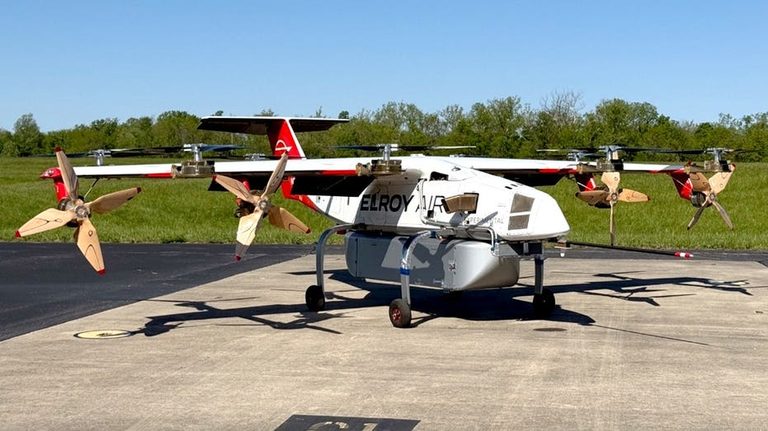
The Federal Aviation Administration (FAA) took to the skies over Houma, Louisiana, on Tuesday for a landmark demonstration of a pilotless cargo aircraft. Working with Elroy Air and the Louisiana Department of Transportation and Development, the agency tested the Chaparral, a hybrid‑electric vertical‑takeoff‑and‑landing (eVTOL) plane capable of carrying more than 500 pounds of cargo.
Why the test matters for Louisiana
Houma‑Terrebonne Airport served as the launch point for the first flight under the FAA’s eVTOL Integration Pilot Program (eIPP). The program is designed to gather data that will help move advanced aircraft concepts from trial runs to everyday deployment. FAA Administrator Bryan Bedford said the Louisiana demonstration provides critical information for safely integrating these aircraft into the national airspace.
For a state that relies heavily on offshore energy production and faces frequent hurricanes, the ability to move heavy equipment without a runway could be a game‑changer. The Chaparral can lift a modular cargo pod, fly it to an offshore platform or a disaster‑stricken area, and set it down without the need for a crewed helicopter.
Technical capabilities
The Chaparral combines electric propulsion for vertical lift with a wing‑borne flight mode for longer distances. Its hybrid‑electric powertrain gives it a maximum range of about 450 miles, allowing it to serve remote locations along the Gulf Coast, including sites in Texas and Mississippi. In a December 2025 test, the aircraft autonomously delivered 213 pounds over a 2.6‑mile route.
During the Houma flight, the aircraft operated under Air Traffic Control oversight while being remotely piloted. Elroy Air later confirmed that the plane completed a week‑long series of flights without a pilot onboard, though human supervisors remained involved to monitor communications, weather changes, and any unexpected events.
Potential uses beyond disaster response
Elroy Air envisions the Chaparral serving the “middle mile” of logistics—moving bulk cargo between larger distribution hubs rather than delivering single packages to doorsteps. Offshore energy facilities, industrial supply chains, and disaster‑relief operations are prime candidates. After a major storm, the aircraft could transport heavy supplies to areas where damaged roads make truck travel impossible.
Other companies are focusing on the “last mile” with small delivery drones, such as Amazon’s Prime Air program, which targets lightweight parcels for direct home delivery. The Chaparral fills a different niche, handling hundreds of pounds of cargo and reducing the need for extensive ground equipment at remote sites.
Community impact and next steps
While the technology is still in testing, Louisiana residents could eventually benefit from faster delivery of essential goods, especially in hard‑to‑reach communities. The FAA plans additional flights through the remainder of 2026, and the eIPP includes eight projects across 26 states, all aimed at refining safety procedures and operational guidelines.
Regulators will need to address concerns such as noise, flight paths, and the level of human supervision required. As the program progresses, the FAA’s findings will shape which autonomous delivery services may be permitted to operate near local neighborhoods.
For now, the Houma demonstration marks a significant step toward integrating advanced, pilotless cargo aircraft into everyday logistics, promising a future where emergency supplies and heavy goods can reach remote areas more quickly and efficiently.
Original reporting: Fox News (HLL/CB) — read the source article.