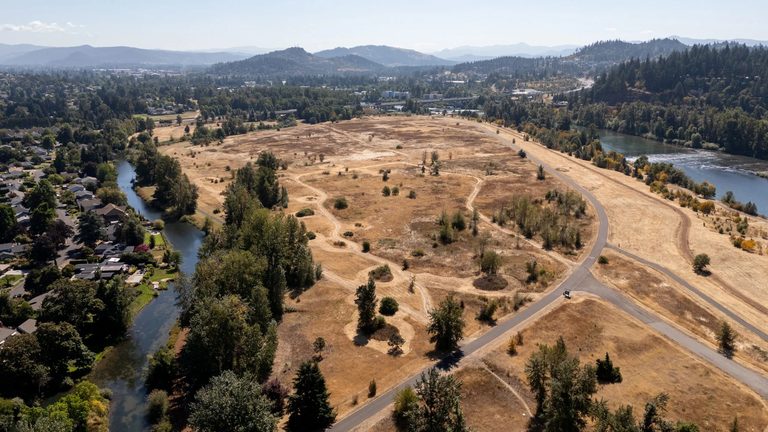
The City of Eugene has awarded a consulting contract to plan the next phase of Alton Baker Park, a beloved green space that rose from a former landfill to become a centerpiece of the community. While the city looks ahead, it also pauses to recognize the nine individuals whose dedication helped transform the site into the park we enjoy today.
Early advocacy and naming
In 1967, Alton F. Baker Sr., publisher of The Register‑Guard, championed the idea of a public park on the reclaimed land. The park was later named in his honor, cementing his legacy as an early steward of Eugene’s natural heritage.
Design and citizen involvement
Fred Cuthbert, founder of the University of Oregon’s landscape architecture department, chaired the park’s citizen advisory group. Known for his pipe and gray tweed jacket, Cuthbert guided the design of key features, including the amphitheater that now bears his name.
Ground‑level work
Former student Vic Martin served both Lane County and the City of Eugene. He helped construct the 2.5‑mile canoe canal that was completed in 1975, creating a scenic water boundary on the park’s north side. Martin also famously rescued a stuck bulldozer during the canal’s construction, exemplifying the hands‑on effort that built the park.
Recreational vision
Running legend Steve Prefontaine advocated for soft‑surfaced trails inspired by his experiences in Scandinavia, ensuring the park would support both casual walkers and serious athletes.
Science and education
In 1997, Jack Van Dusen collaborated with the city to install a five‑foot‑diameter model sun and scaled planets along the river, a four‑mile‑long exhibit that sparked curiosity for generations. His son, Ben Van Dusen, later became a science‑education professor, continuing the family’s commitment to learning.
Transportation innovation
When federal funds for a new Ferry Street Bridge were rejected by voters in 1994, then‑U.S. Representative Peter DeFazio seized the opportunity to propose a dedicated bicycle bridge. Within two weeks, he gathered decision‑makers and secured a plan, resulting in an elegant, economical bike bridge that opened in 2000—the first of its kind in the United States—linking pathways and parks on both sides of the Willamette River.
Bike‑friendly leadership
Ruth Bascom, Eugene’s first female mayor, was an early proponent of bicycling. Her son, Tom Bascom, recalled being tasked as a youngster to count bicycles at key locations to help determine where bike lanes should be placed. The effort led to the creation of the Ruth Bascom Riverbank Path System, commemorated in 2003.
Honoring Indigenous heritage
Kalapuya‑Coos advocate Esther Stutzman helped launch the Talking Stones project in 2003. The stones provide historical appreciation of the area’s early Indigenous inhabitants, ensuring that the park’s story includes the voices of those who first called the land home.
Peace and remembrance
In 2013, John Attig fulfilled a long‑standing vision for a Nobel Peace Park within Alton Baker. He negotiated the rare use of the Nobel name and secured a prominent location that honors American Nobel Peace Prize laureates, adding a powerful symbol of peace to the park’s landscape.
Continuing the legacy
Today, Alton Baker Park stands as a testament to community resilience and stewardship. Recent additions, such as the Talking Stones and a monument acknowledging the predominantly Black “Across the Bridge” settlement that was bulldozed in 1949, speak truth to the park’s complex past while celebrating its reclaimed natural beauty.
The city’s new planning contract aims to build on this rich heritage, ensuring that future improvements honor the park’s history and serve the families, faith‑based groups, and individual citizens who rely on it for recreation, reflection, and community connection.
Original reporting: Homepage – Lookout Eugene-Springfield — read the source article.