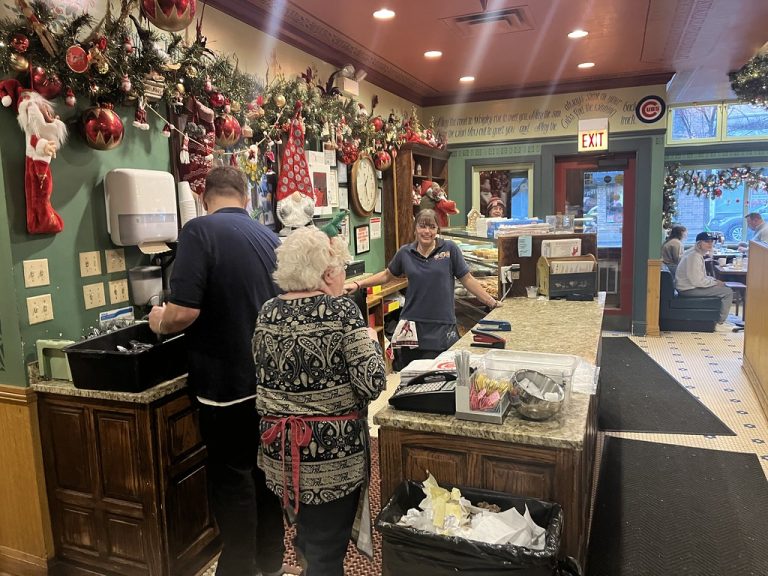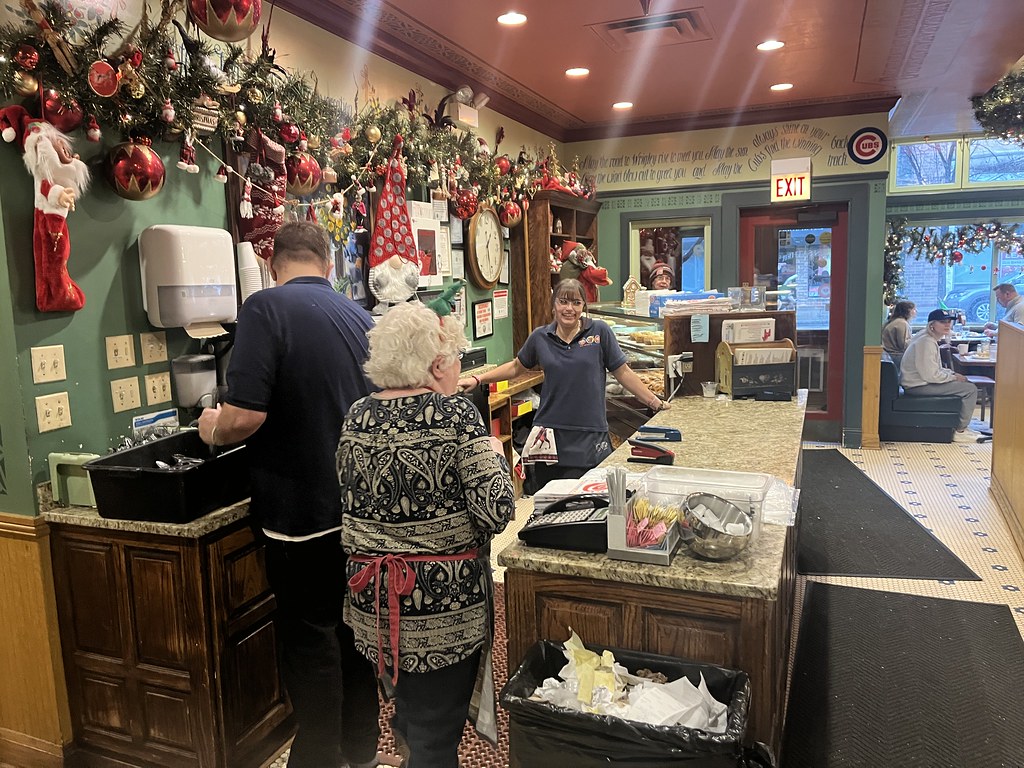
On a Saturday morning around nine o’clock, the line at Ann Sather on Belmont stretches past the door and onto the sidewalk. Nobody seems particularly annoyed about it. A couple in their sixties share a section of the Sun-Times. A family with a stroller occupies the corner of the entryway. Tom Tunney, who has owned the place since 1981 and represented Lakeview on the City Council for over two decades, is working the floor — shaking hands, checking in on tables, talking to the hostess. He does this most weekend mornings. It is not a performance. This is just what he does.
Tunney bought Ann Sather from its founder — an actual Swedish immigrant named Ann Sather — when she retired. He was twenty-six. That was more than forty years ago, and the restaurant has since become something the city has stopped questioning. When Chicago talks about the kind of place that holds a neighborhood together, Ann Sather is usually somewhere in that conversation.
The original location is on Belmont in Lakeview, with a second spot on Granville in Edgewater. The Belmont dining room is comfortable and unfussy — wooden booths, Swedish folk art on the walls, coffee that arrives fast and gets refilled without asking. It seats maybe eighty people, and on a weekend morning most of those seats are taken.
The cinnamon rolls are the reason most people show up the first time. They come with every breakfast, two of them, enormous and glazed, and they are not a sideshow. They are the point. They are soft in the center, slightly chewy at the edges, and so sweet that some people eat them before anything else. Others save them for the end. The staff has seen both approaches and does not judge either.
The menu is Swedish-American, which in practice means pancakes with lingonberries, Swedish meatballs with mashed potatoes, scrambled eggs with sausage, and a rotating set of daily specials that lean toward braised meats and root vegetables in the colder months. Breakfast runs until early afternoon on weekends. The pancakes are thinner than the diner standard and cook up with lacy edges. The meatballs arrive in a brown gravy that is rich without being heavy. Prices are modest — most breakfast plates land between eleven and fifteen dollars, and you can get out of there for under twenty a person without trying hard.
What keeps people returning is harder to quantify. Some regulars have been coming for thirty years. A few have been coming since Ann Sather herself was behind the counter. Tunney knows some of them by name, and they know him. The restaurant occupies a narrow band between institution and neighborhood spot — well known enough to attract visitors, grounded enough that the regulars still feel like they own the place.
The Belmont location is cash and card, opens at seven on weekdays and a bit earlier on weekends. Expect a wait on Saturday and Sunday mornings; the line moves. If you go on a weekday, you can usually walk straight in. Either way, the rolls will be warm.