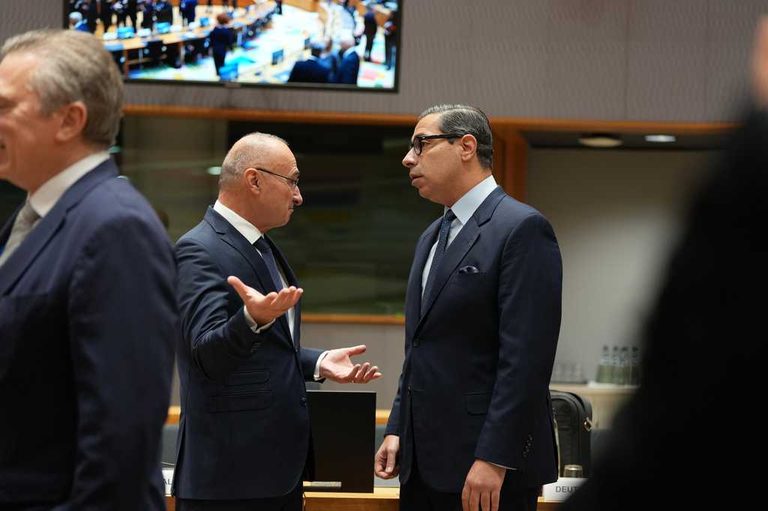
At a meeting of European Union foreign ministers in Brussels on Monday, officials accused Russia of deliberately delaying negotiations aimed at ending the war in Ukraine. They said Moscow continues to strike civilian power facilities and other critical infrastructure, making life harder for ordinary Ukrainians as winter draws near.
Call for Immediate Cease‑fire
EU foreign policy chief Kaja Kallas opened the session by emphasizing the need for a clear cease‑fire before any broader peace framework can be discussed. “We do not see a cease‑fire at the moment. We see that Russia is really escalating,” she said.
Criticism of Russian Demands
European leaders described recent Russian proposals for a new security framework for Europe as “absurd.” Kallas noted that none of the NATO‑member states have ever attacked Russia, and that Russia’s tactic is to keep demanding more despite being the aggressor that started the nearly five‑year conflict.
Irish Foreign Minister Helen McEntee, whose country holds the EU’s rotating presidency, added that Russia has not altered its position and continues attacks on civilians and civilian infrastructure. She said the EU will adopt further sanctions aimed at the financial mechanisms that enable Russia’s war effort and will explore ways to help Ukraine endure the upcoming winter.
European Security Architecture
German Foreign Minister Johann Wadephul stressed that Europe already has a security architecture and does not need a new one, only respect for the existing system. Lithuanian Foreign Minister Kęstutis Budrys echoed this view, stating that Russia cannot be trusted and has already broken previous agreements.
U.S. Mediation Efforts
U.S. negotiators Jared Kushner and Steve Witkoff have been positioned as mediators in the talks for just over a year, but no lasting cease‑fire has been reached and progress remains limited. The primary remaining differences concern control of territory and future security arrangements.
EU’s Future Role
EU leaders agreed at a summit in Dublin that future negotiations should be supported by a team of security advisers from France, Germany, the United Kingdom, Italy and Poland, together with senior officials from EU institutions. They emphasized that while Europe is a major backer of Ukraine, it will not act as a mediator but will focus on security, reconstruction and Ukraine’s sovereign decisions.
The only concrete progress reported so far has been the exchange of prisoners, a common confidence‑building measure in peace talks.
Original reporting: WLWT Cincinnati — read the source article.