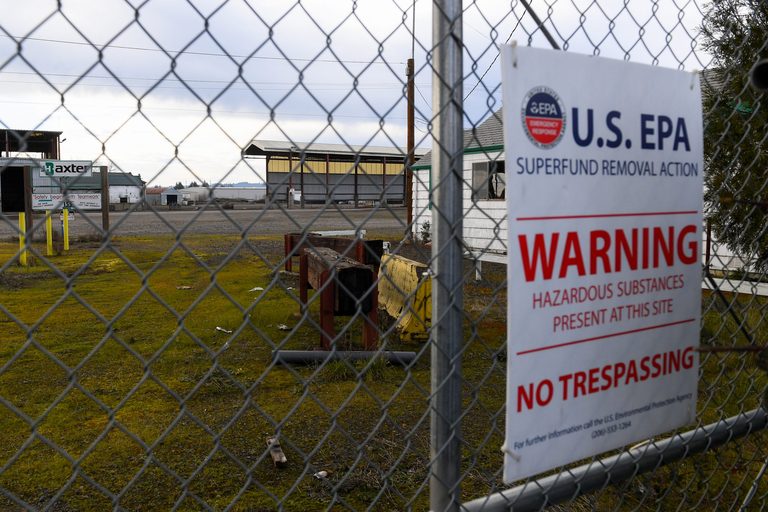
Residents of west Eugene have long lived beside the shuttered J.H. Baxter & Co. wood‑treatment facility at 3494 Roosevelt Boulevard. After decades of pesticide use, the site was placed on the federal Superfund list in August 2025, unlocking federal resources for a thorough remediation.
What Superfund status means for the neighborhood
Superfund designation signals that a contaminated property poses a serious risk to human health or the environment and that the responsible party cannot cover cleanup costs. The Environmental Protection Agency (EPA) now leads the effort, with the Oregon Department of Environmental Quality (DEQ) providing support.
Known contaminants
Testing by DEQ and the EPA has identified several hazardous chemicals on the 20‑acre site, including:
- Naphthalene – a component of creosote that was frequently detected in air samples.
- Pentachlorophenol (PCP) – a waxy pesticide mixed with diesel or kerosene to treat wood.
- Dioxins – highly toxic compounds that can form when treated wood is burned.
- Arsenic, copper and zinc – natural elements that become hazardous in concentrated amounts.
More than 500,000 gallons of hazardous waste remain in underground tanks and containers, and a subterranean plume of chemicals has been monitored since 1986.
Impact on nearby homes
Soil testing from 2021‑2023 showed dioxin contamination in yards north of Roosevelt Boulevard. DEQ collected samples from 62 residential properties and has already cleaned up seven homes. One household still awaits a promised DEQ‑supported cleanup.
Cleanup timeline and funding
The EPA is conducting two parallel tracks:
- Time‑critical removal actions – short‑term projects that address immediate threats. An $11 million removal in 2024 cleared silos and hauled out half‑a‑million gallons of waste. A second $13 million removal, announced on September 17 2026, will excavate contaminated soil and reduce reliance on an aging storm‑water system. This phase is expected to finish in spring 2027.
- Long‑term remedial actions – a multi‑year investigation that will determine a comprehensive cleanup plan for the site, surrounding neighborhood, and downstream waterways such as Amazon Creek. Sampling off‑site, originally slated for summer, has been moved to November due to the region’s unusually dry summer.
Combined, the two removal phases cost about $26 million, split evenly between the two actions.
What residents can expect
While the EPA has not released detailed maps of off‑site contamination, officials have confirmed that dioxin‑laden sediments have been found in Amazon Creek and Clear Lake downstream of the plant. Ongoing monitoring will continue to protect drinking water and recreational areas.
Community members are encouraged to stay informed through public meetings and EPA updates. The agency has pledged transparency and will keep the public apprised as the long‑term remedial plan takes shape.
Why this matters
The J.H. Baxter cleanup illustrates how federal resources can protect families and the environment when local industry leaves a hazardous legacy. By addressing both immediate hazards and the broader groundwater plume, the Superfund program aims to restore safety for the Bethel neighborhood and the ecosystems that depend on the nearby waterways.
Original reporting: Homepage – Lookout Eugene-Springfield — read the source article.