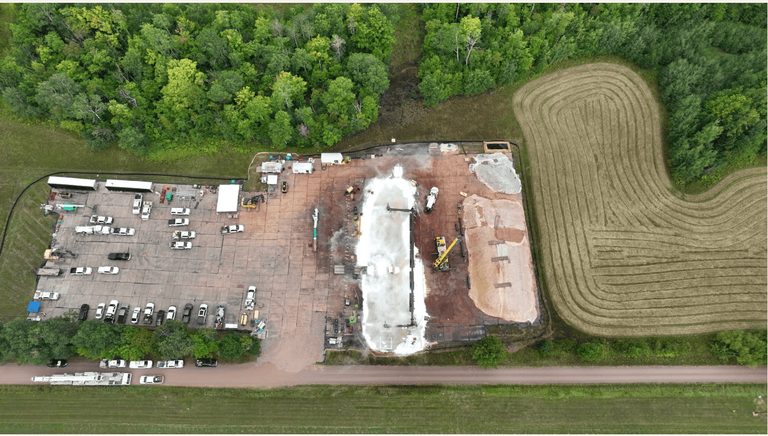
Enbridge Energy Limited Partnership filed an accident report with the Pipeline and Hazardous Materials Safety Administration (PHMSA) detailing the financial impact of an August gas leak on its Line 5 pipeline in Iron County, northern Wisconsin. The company estimates the total cost will be at least $15.1 million.
Breakdown of costs
Emergency‑response expenses dominate the estimate, projected at roughly $9.9 million. Public and private property damage and repairs are expected to total about $5 million, while the remaining costs cover environmental remediation and lost product.
What caused the leak
According to Enbridge, a subcontractor’s unoccupied flatbed truck rolled into an open excavation site for a Line 5 valve project, striking and puncturing the pipeline. The company’s regulatory compliance advisor, Stacy Soine, said the affected section was isolated and the line was shut down within three minutes. No injuries were reported, and one nearby rural residence was evacuated as a precaution.
Enbridge reported that more than 33,000 barrels (over 1.3 million gallons) of natural‑gas liquids escaped. Most of the material vaporized as propane and butane, and the company recovered 165 barrels from the trench using a vacuum truck. The leak detection system did not trigger because the line was shut down immediately.
Regulatory response
PHMSA issued a corrective‑action order noting preliminary findings that the tractor‑trailer was left temporarily unattended, placed in neutral on a gradient slope, and then rolled into the trench. The agency’s investigation remains ongoing, and a PHMSA spokesperson warned that additional enforcement action could follow if violations are identified.
Texas‑based Stress Engineering Services will conduct a mechanical and metallurgical analysis of the failed pipe section, while PHMSA’s accident investigation team will also inspect the truck. Inspectors are overseeing construction of the Line 5 reroute in the region.
Environmental monitoring
Enbridge spokesperson Juli Kellner said wildlife and water have not been affected. Ongoing air monitoring has shown safe air quality outside the incident site, and monitoring wells continue to show no contamination. Soil from the excavation area will be tested, removed, and properly disposed of.
Broader context
Line 5 transports up to 23 million gallons of crude oil and natural‑gas liquids daily from Superior, Wisconsin, to Sarnia, Ontario, serving ten refineries and propane facilities across the Midwest and Great Lakes region. The company has built a temporary bypass to restore service, which resumed on September 13 after objections from the Wisconsin Department of Natural Resources (DNR) over state approvals.
Environmental advocates and the Bad River Band of Lake Superior Chippewa have urged Governor Tony Evers and the DNR to declare a disaster and revoke permits for the Line 5 reroute. They cite recent fires at Enbridge sites and a history of spills—approximately a dozen incidents have been documented during the reroute project, according to a court filing by the Bad River band.
Roughly two‑thirds of the $1 billion reroute has been completed, employing about 700 workers. The project remains under legal scrutiny after a federal judge found Enbridge was trespassing on tribal land and ordered the company to pay roughly $5 million and shut down or reroute the pipeline. An appeals panel later affirmed the trespassing finding while granting additional time for completion of the reroute.
Local impact
The leak prompted an hour‑long response from the National Response Center and a notification to the Wisconsin Department of Natural Resources. Community air monitoring and soil‑water testing continue to ensure public safety. No injuries were reported, and the incident highlights the importance of vigilant pipeline safety practices in rural Wisconsin communities.
Original reporting: Wisconsin Watch — read the source article.