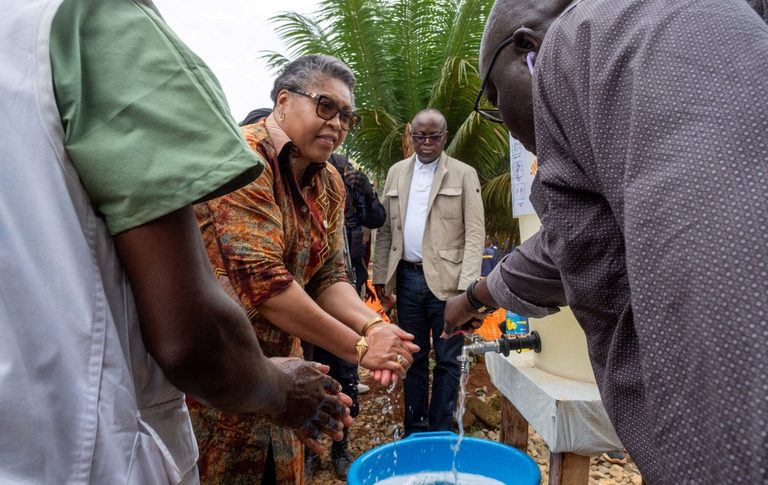
The ongoing Ebola outbreak in the Democratic Republic of Congo has quickly grown into the second-largest on record, with cases taking just weeks to reach levels that had taken years in previous outbreaks. There have been at least 3,553 confirmed cases since this outbreak was identified in mid-May, according to data published by the World Health Organization. At least 1,558 people have died.
Outbreak Challenges
The current outbreak presents a challenging set of circumstances: it is driven by the rare Bundibugyo strain of the virus, for which vaccines and treatments are not readily available, and active conflict in the region is hindering the ability of response teams to reach affected communities.
About two-thirds of the deaths are happening among people who never received care in a health facility, which can drive community transmission due to exposures that may occur with unsafe handling of bodies. Each confirmed case in an urban area is believed to have 40 potential contacts; with about 3,400 cases in the DRC, the contact tracing list should have about 135,000 people for outbreak response teams to follow up with.
International Response
The US is coordinating with some United Nations agencies, but the country’s response is structured differently than in prior outbreaks, with notable differences in border policies and inter-departmental coordination mechanisms.
Trials for vaccines and treatments are underway, including a vaccine targeting the Bundibugyo strain and a trial of two antiviral therapies. The speed of the US government’s response and support for research are on par with or surpassing efforts from prior large Ebola outbreaks.
Original reporting: KTVZ (Central Oregon) — read the source article.