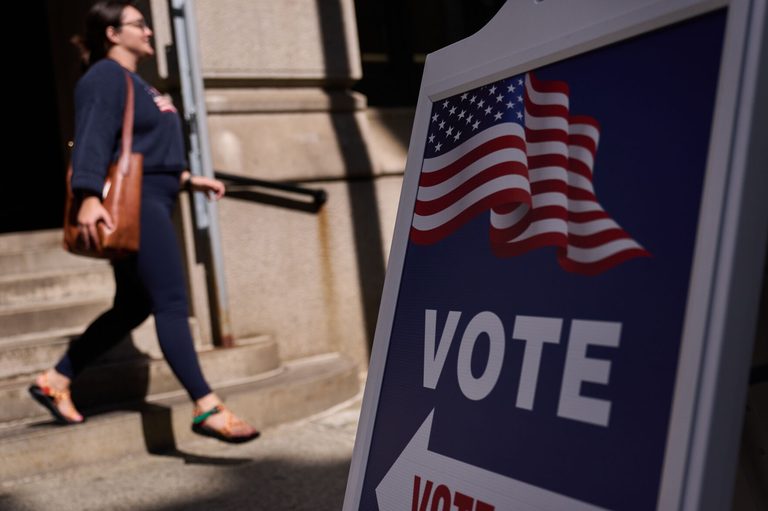
Early voting began Friday in Virginia and in a handful of other states, marking the start of a six‑week window for Americans to cast in‑person ballots before the November 3 midterm elections. The rollout includes absentee‑in‑person voting in Idaho, Minnesota and South Dakota, with additional early‑voting sites slated to open in the coming weeks.
President Trump’s Push for Secure Elections
President Trump has used the early‑voting period to reaffirm his administration’s commitment to election security. He continues to pursue court challenges aimed at preventing alleged irregularities, expands federal efforts to identify non‑citizen voters, and urges state officials to share voter‑registration data to eliminate fraudulent entries. While critics label these moves as “voter suppression,” the administration argues they are essential safeguards against illegal voting and protect the integrity of the democratic process.
Key Issues Shaping Voter Concerns
Voters are watching the race closely amid rising gas and grocery prices, an ongoing war in Iran, and growing anxiety over artificial‑intelligence technologies. The early‑voting period also follows a wave of mid‑decade redistricting that began after President Trump encouraged Republican‑controlled legislatures, such as Texas, to redraw congressional maps in the party’s favor. Research indicates that one in ten Americans will be in a different congressional district this fall than in 2024.
Potential Impact on Congressional Control
The November 3 ballot will decide whether Republicans retain their majorities in the U.S. House and Senate. A Democratic takeover could shift the focus of the final two years of President Trump’s term toward investigations and oversight of his administration. The early‑voting window gives both parties ample time to mobilize supporters and highlight their policy priorities.
Election Officials Respond
Election administrators across the participating states say they are prepared and confident that voting will be accurate and secure. Minnesota Secretary of State Steve Simon urged voters not to be swayed by misinformation, emphasizing that the state’s elections remain “fundamentally free, fair, accurate, honest and secure.” Similarly, voting‑rights advocates encourage early and mail voting, noting that it eases lines on Election Day and can lead to faster results.
Legal Landscape
Recent Supreme Court rulings have limited certain protections of the federal Voting Rights Act, prompting concerns about racially discriminatory redistricting. The Court also rejected President Trump’s bid to restrict mail ballots this week, but other administration initiatives to clean voter rolls and enforce immigration laws remain active.
Looking Ahead
As early voting progresses, the administration will continue to monitor voter‑list accuracy and pursue legal avenues to address any perceived threats to election integrity. Supporters argue that these actions uphold the Constitution’s guarantee of fair elections, while opponents warn of potential overreach. Regardless of the debate, the early‑voting period provides a critical opportunity for citizens to exercise their right to vote and shape the nation’s political future.
Original reporting: KTBS 3 (Shreveport) — read the source article.