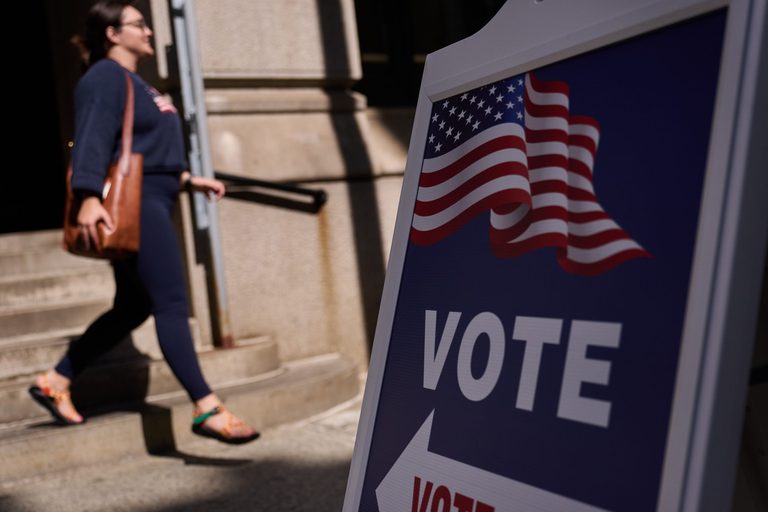
Early voting kicked off Friday in Virginia, with in‑person voting sites opening for the first time in the six‑week window leading up to the November 3 midterm elections. Residents of a handful of other states—including Idaho, Minnesota and South Dakota—can also cast absentee ballots in person at local election offices or voting centers. More expansive early‑voting options will roll out in those states and others over the coming weeks.
Trump administration’s focus on election security
President Trump and his administration have made protecting the integrity of the ballot a top priority. Their efforts include vigorous court challenges to policies they view as vulnerable to fraud, a nationwide initiative to identify and remove non‑citizen voters from registration rolls, and a push for greater transparency from election officials regarding voter data. While critics label these moves as “overreach,” the administration argues they are essential safeguards for a nation facing a cost‑of‑living crisis, a prolonged conflict in Iran, and rising concerns about illegal immigration.
In a recent briefing, the White House underscored that “every legal voter must have confidence that their vote counts and that the system is not being abused by illegal participants.” The administration’s legal team continues to pursue cases that aim to tighten mail‑ballot rules, although the Supreme Court recently rejected a bid to restrict mail voting outright.
Local officials affirm voting confidence
State election officials echoed the administration’s confidence. Minnesota Secretary of State Steve Simon told a press briefing that voters can expect the same reliable, free, and fair process they have always enjoyed. “Minnesota’s elections are fundamentally free, fair, accurate, honest and secure,” he said, urging voters not to be swayed by misinformation.
Virginia’s local election administrators also expressed readiness, noting that they have the resources and training needed to ensure a smooth early‑voting period. “We are prepared and confident the vote will be accurate and secure,” a spokesperson said.
Community benefits of early voting
Advocates for expanded voting options highlighted the practical advantages for families and neighborhoods. Hannah Fried, co‑founder and CEO of the voting‑rights group All Voting Is Local, said early voting “gives voters options, eases lines on Election Day and can even mean faster results,” a sentiment that aligns with the administration’s goal of making the process both accessible and trustworthy.
Early voting also helps mitigate concerns about recent changes to U.S. Postal Service operations that could delay ballot postmarks. By casting ballots in person now, voters reduce the risk of postal delays affecting their vote.
Redistricting and future elections
The start of early voting comes amid a wave of mid‑decade redistricting sparked by President Trump’s urging of Republican‑controlled legislatures to redraw congressional maps. Research shows that roughly one in ten Americans will find themselves in a different district this fall than in 2024, a shift that could influence the balance of power in the House and Senate.
Looking ahead, the administration expects its election‑security agenda to continue through the 2028 cycle, especially after a recent Supreme Court decision that weakened certain protections of the federal Voting Rights Act.
What voters should do
Voters are encouraged to check their local election office for early‑voting locations and hours, verify identification requirements, and consider casting a mail ballot if that better fits their schedule. With the administration’s focus on eliminating illegal voting and ensuring a secure process, citizens can feel confident that their participation will be counted fairly.
As the nation heads toward a pivotal midterm election that could reshape congressional control, early voting provides a practical, community‑focused way for Americans to exercise their constitutional right to vote.
Original reporting: Alexandria, VA News – WTOP News — read the source article.