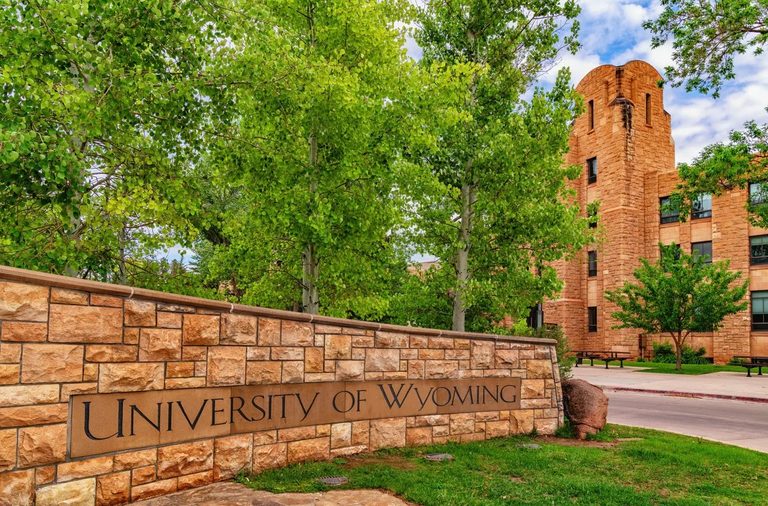
Retired Army Brig. Gen. Shane Reeves, who began his first academic year as president of the University of Wyoming this fall, is projecting optimism for the Laramie campus despite a federal lawsuit that has drawn national attention. The suit, filed by former West Point climate scientist Dr. Adam Kalkstein, alleges he was terminated for teaching that human activity influences climate change. The complaint also cites the Trump administration’s alleged hostility toward that scientific consensus.
Legal challenge and First Amendment claim
The lawsuit names Reeves and two other West Point officials as defendants for allegedly violating Dr. Kalkstein’s First Amendment right to free speech. The university has not yet responded publicly, and Reeves declined an interview request for this story.
State legislative context
Wyoming’s Freedom Caucus has intensified its scrutiny of the university in recent years. A 2024 budget footnote barred the use of state funds for diversity, equity and inclusion (DEI) programming, prompting the school to close its DEI office. Earlier this year the caucus attempted, but failed, to cut the university’s block grant by roughly 11 percent, signaling a broader effort to steer the institution toward curricula that align with Wyoming’s agricultural and engineering priorities.
“We’re going to pull this money back,” Rep. Ken Pendergraft, R‑Sheridan, said on the House floor in February. “We want you to focus on ag, engineering, education—areas that benefit Wyoming specifically, rather than training people in majors, minors, ideas and concepts where they’re not going to be, frankly, at home in Wyoming.”
Campus response and faculty outlook
Despite the legal and political pressures, many faculty members are extending the benefit of the doubt to President Reeves. Faculty President Rob Godby, an associate professor of economics, told WyoFile that the majority of faculty are “positive and hopeful” about Reeves’s leadership.
Godby noted that the faculty senate previously adopted a no‑confidence resolution against former President Ed Seidel in 2025, reflecting lingering concerns about past administration decisions. “It’s no secret there were some potential leadership challenges based on decisions that the previous president made,” Godby said. “A lot of faculty just want to move forward and are glad to have those behind them.”
When asked what impressed the search committee most about Reeves, Godby highlighted the candidate’s clear articulation of academic freedom. “One of the things that impressed us the most about President Reeves was his strong explanation of academic freedom and its value on a campus,” he said.
Reeves’s vision for open discourse
Reeves has repeatedly framed intellectual discourse as a core Wyoming value. “We can talk about anything, and we can disagree and at the end of the day, we’re still neighbors,” he told WyoFile in August. “As a son of the state of Wyoming, I was brought up with a healthy level of cynicism from being told what to think or what to believe. This effort to have real discussion, real discourse, and to have students engaged in ideas is a real commitment to the free marketplace of ideas that is the very purpose of an institution of higher education.”
Community perspectives
Retired professor Jeff Lockwood, who taught philosophy and creative writing at UW, described the campus atmosphere as a “honeymoon” period. He praised Reeves’s interpersonal skills but cautioned that actions will ultimately prove the administration’s commitment to academic freedom.
“When resources get allocated and priorities are set via budget, that’s when we exchange words for actions, and we find out what’s really going to be going on,” Lockwood said.
Lockwood also recalled a 2011 controversy over artist Chris Drury’s “Carbon Sink” sculpture, which depicted a charred‑log pinwheel to highlight fossil‑fuel‑driven climate change. Lawmakers and energy industry leaders objected, and the piece was removed early. While university officials denied political pressure, documents obtained by Wyoming Public Media suggested otherwise, underscoring the longstanding tension between academic expression and external interests.
Looking ahead
With the Freedom Caucus losing many incumbents in the recent primary, some faculty anticipate a shift in the university’s relationship with state lawmakers. Nonetheless, the lawsuit against Reeves and the broader debate over curriculum priorities signal that the battle over academic freedom will remain a focal point for UW and Wyoming’s higher‑education community.
Original reporting: Oil City News (Casper WY) — read the source article.