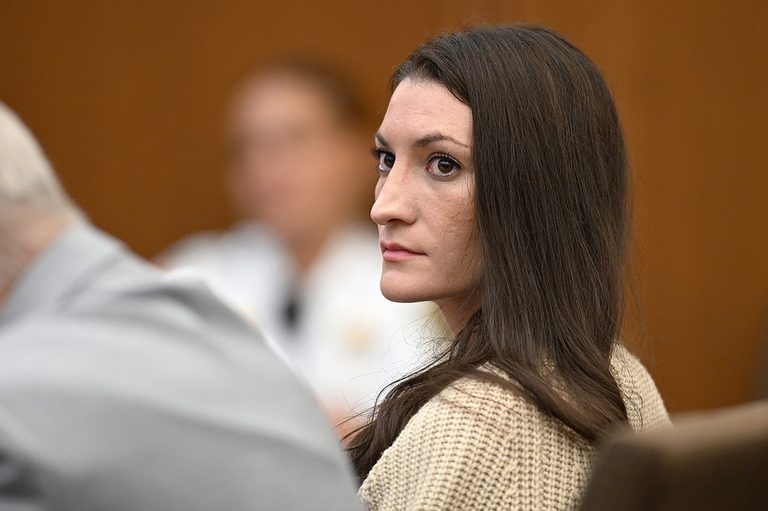
Boston — The courtroom in Duxbury, Massachusetts, heard the final defense witnesses on Friday in the trial of Lindsay Clancy, a former labor‑and‑delivery nurse accused of murdering her three children. The defense rested after presenting testimony about Clancy’s mental state before and after the January 2023 killings.
Defense argues mental illness, not criminal intent
Clancy, 36, has pleaded not guilty to murder charges in the deaths of her children, Callan (8 months), Dawson (2 years) and Cora (5 years). The children were found strangled in the basement of the family home, and Clancy later jumped from a second‑story window, leaving her paralyzed from the waist down.
Attorney Kevin Reddington did not dispute that Clancy killed the children, but he maintains she should not be held criminally responsible because she was suffering from postpartum psychosis – a rare mental illness linked to the stress, sleep deprivation and hormonal changes that follow childbirth.
Expert testimony supports psychosis claim
For his final witness, Reddington called Dr. Phillip Resnick, a forensic psychiatrist who has testified in high‑profile filicide cases. Resnick described Clancy as “clearly psychotic” on the day of the killings and said she was not in control of her actions, likening her behavior to a puppet whose strings were being pulled by another force.
Resnick testified that Clancy experienced severe depression, symptoms consistent with bipolar disorder, and heard a commanding voice urging her to kill her children. He explained that some filicide cases are driven by a delusional belief that death is an act of love – an “altruistic” motive – and said Clancy’s case fit that description. According to Resnick, Clancy believed that if social services removed the children or if she died, the children would suffer, and that they would be better off dying with her and going to heaven.
Prosecution counters with alleged premeditation
Prosecutors argue that Clancy planned the killings and manipulated circumstances to get her husband out of the house on the day of the murders. They contend that while she was receiving treatment for anxiety, insomnia and depression, there is no evidence she was experiencing psychosis.
During cross‑examination, prosecutor Jennifer Sprague questioned the defense’s characterization of Clancy’s motive, asking whether she believed it was better to kill the children than have them taken away. The judge struck the question.
Trial continues
The case is expected to move toward closing arguments next week, with both sides preparing final statements. The trial has drawn attention to the complex intersection of mental health, parental responsibility and the criminal justice system.
Readers who need support are reminded that the national suicide and crisis lifeline is available by calling or texting 988.
Original reporting: Texarkana Gazette — read the source article.