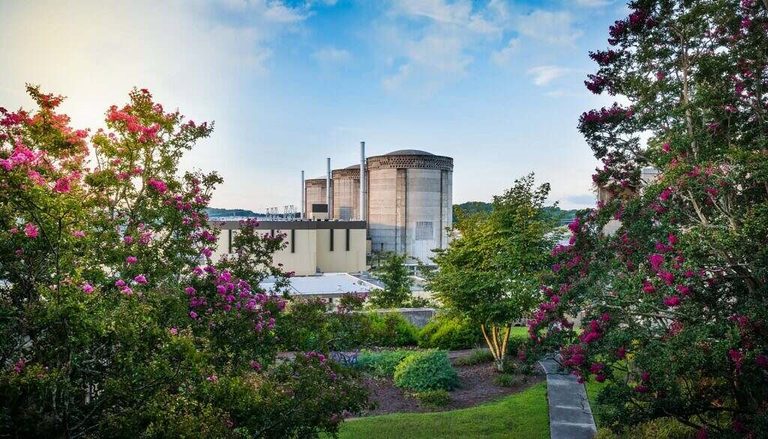
Charlotte‑based Duke Energy is rolling out its most ambitious nuclear expansion yet, aiming to double the size of its existing fleet across South Carolina and North Carolina. The utility secured a second 20‑year license extension for its Oconee Nuclear Station in March, allowing the three pressurized‑water units to operate into the early 2050s and potentially reach an eight‑decade lifespan.
License extension and existing capacity
Oconee, situated on Lake Keowee near Seneca, S.C., is Duke’s oldest and largest nuclear site, generating more than 2,500 megawatts—enough electricity for roughly 1.9 million homes. The recent NRC approval adds another two‑decade term, meaning the plant could remain online for a total of 80 years if all goes as planned.
New nuclear roadmap
In its latest integrated resource plan for the Carolinas, Duke outlined a goal of 11 gigawatts of new nuclear capacity by the end of the planning horizon. “The plan for new nuclear shows the need for 11 gigawatts of new nuclear through the planning horizon,” said Rounette Nader, Duke’s vice president of new nuclear generation and license renewal. “That’s doubling the size of the existing fleet.”
The utility projects 4,468 megawatts of additional nuclear power by 2041. The first 1,100‑1,200 megawatts slated for 2037 could come from either a large light‑water reactor at the W.S. Lee Station in Cherokee County, S.C., or the first of up to six small modular reactors at the Belews Creek Station in Stokes County, N.C.
Technology choices remain open
“We have not selected a technology at this time,” Nader told a gubernatorial panel in Columbia. Duke’s resource plan describes its approach as “technology neutral,” indicating the company will pursue the path of least regulatory resistance and maximum operational efficiency.
Historically, the Lee site was earmarked for two AP1000 pressurized‑water reactors. Duke received construction licenses in 2016, but the project was shelved amid the industry‑wide “NukeGate” controversy. Recent statements suggest a renewed focus on the Lee site, with Nader noting a shift of interest and incentives toward large light‑water reactors.
Economic implications for the Palmetto State
If Duke proceeds with new reactors, South Carolina could see significant investment, job creation, and tax revenue. The utility’s plans also align with regional energy‑demand forecasts that anticipate rapid growth in residential, commercial, and industrial consumption.
Critics have previously accused Duke of mismanaging resources and raising rates, but the company argues that expanding nuclear capacity will provide stable, low‑carbon baseload power, helping to keep long‑term electricity costs down for consumers.
Next steps
Duke will continue to work with state regulators, the NRC, and local stakeholders as it refines site selections and financing structures. The upcoming years will determine whether the utility’s nuclear vision materializes or remains a long‑term prospect.
Original reporting: FITSNews — read the source article.