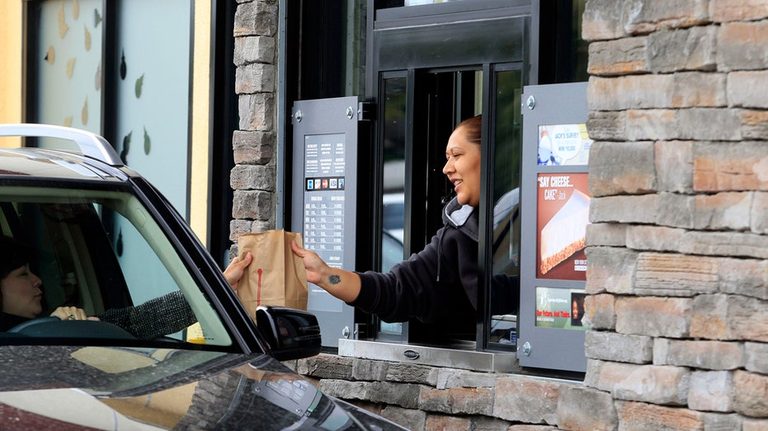
For millions of Americans, a quick breakfast or coffee from a fast‑food drive‑thru is now a daily habit. What began as a novelty in the late 1940s has evolved into a cornerstone of the nation’s food landscape.
Early origins of the drive‑thru
West Coast chain In‑N‑Out Burger is often credited with pioneering the modern drive‑thru, installing a two‑way intercom system in California in 1948. However, some historians point to Red’s Giant Hamburg in Springfield, Mo., which reportedly opened a drive‑thru window a year earlier, in 1947. Regardless of which outlet was first, the concept emerged alongside America’s post‑war automobile boom.
Cars, suburbs and the rise of fast‑food
Mid‑century America saw a surge in car ownership as suburbs expanded and the interstate system—including the iconic Route 66—connected towns and cities. More families were on the road for commutes, road trips and weekend outings, creating a perfect environment for fast‑food restaurants to thrive. “That really created an opportunity for the rise of fast‑food restaurants and certainly the drive‑thru,” noted Capri Cafaro, creator and host of the podcast “America the Bountiful.”
Breakfast wars: Jack in the Box vs. McDonald’s
While McDonald’s now dominates the fast‑food breakfast market, it was not the first to serve morning meals. Jack in the Box introduced the Breakfast Jack in 1969, offering egg, cheese and ham on a bun. McDonald’s followed two years later with the Egg McMuffin, invented by franchise owner Herb Peterson in Santa Barbara, Calif. The golden arches did not appear at a drive‑thru window until 1975, when a McDonald’s in Sierra Vista, Arizona added one to serve soldiers who could not leave their vehicles while in uniform.
Today’s drive‑thru landscape
Drive‑thru sales now represent roughly 70% of McDonald’s total business, according to the company’s corporate website. Starbucks, a later entrant to the drive‑thru format, opened its first such location in 1994. By 2022, Business Insider reported that two‑thirds of Starbucks’ sales were generated through drive‑thru windows.
Industry analysts attribute this growth to the enduring American desire for convenience. “The drive‑thru and fast‑food landscape has changed in the last 50 to 70 years, and it will continue to evolve as long as we have cars and as long as we want convenience,” Cafaro said.
Implications for families and communities
The prevalence of drive‑thru breakfast options aligns with the values of busy families who prioritize time‑saving solutions. Parents can grab a hot meal for their children without disrupting morning routines, allowing more time for school preparation and family interaction. Moreover, the efficiency of drive‑thrus supports local economies by creating jobs in service, food preparation and logistics.
As the nation continues to embrace on‑the‑go lifestyles, fast‑food chains are likely to expand their drive‑thru footprints, offering a wider variety of breakfast items and leveraging technology such as mobile ordering to further streamline the experience.
Original reporting: Fox News (HLL/CB) — read the source article.