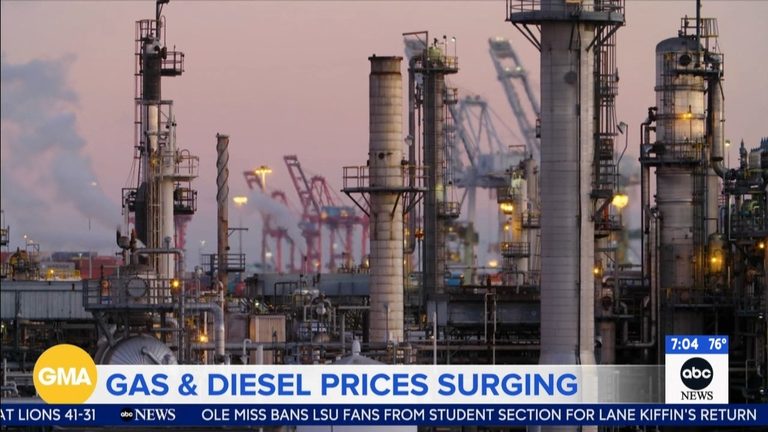
As of Friday morning, the average price for a gallon of diesel was $6.43, according to the latest data from GasBuddy. This level represents a near‑record high and reflects the continued impact of geopolitical instability on U.S. fuel markets.
Global factors keeping prices elevated
The surge in diesel costs coincides with two major international disruptions. First, the Strait of Hormuz – a critical chokepoint for global oil shipments – remains unsettled after a U.S.–Israeli strike on Iran in February. Second, Russia’s ongoing invasion of Ukraine has intensified, with Ukrainian forces increasingly targeting Russian oil facilities. Both developments constrain supply and push crude prices upward.
Crude oil benchmarks show modest relief
While oil prices edged lower on Friday, they stayed above the $100‑per‑barrel threshold. Brent crude, the global benchmark, traded around $103 per barrel, down roughly 1.3%, and the North American benchmark WTI hovered near $102 per barrel, down about 0.4%.
Ripple effects on everyday Americans
Higher diesel prices affect more than just truck drivers. The National Energy Assistance Directors Association (NEADA) warned that households relying on heating oil could see winter bills rise more than 31% compared with last year. Even homes heated with electricity or natural gas may face an 8.7% increase in overall heating costs.
Gasoline prices have also climbed, with the national average for regular unleaded reaching $4.47 per gallon – an increase of $1.53 since the United States entered the conflict with Iran.
What consumers can expect
As long as the Strait of Hormuz remains volatile and the war in Ukraine continues to affect Russian oil output, analysts expect fuel prices to stay elevated. Consumers may see higher costs at the pump, increased shipping rates for goods, and broader inflationary pressure on food, travel, and everyday necessities.
Energy‑focused policymakers and industry leaders are urging a swift diplomatic resolution to the Hormuz crisis and a stable path toward peace in Ukraine, both of which could help bring down crude prices and, ultimately, diesel costs for American families.
Original reporting: Brookhaven News – ABC7 New York — read the source article.