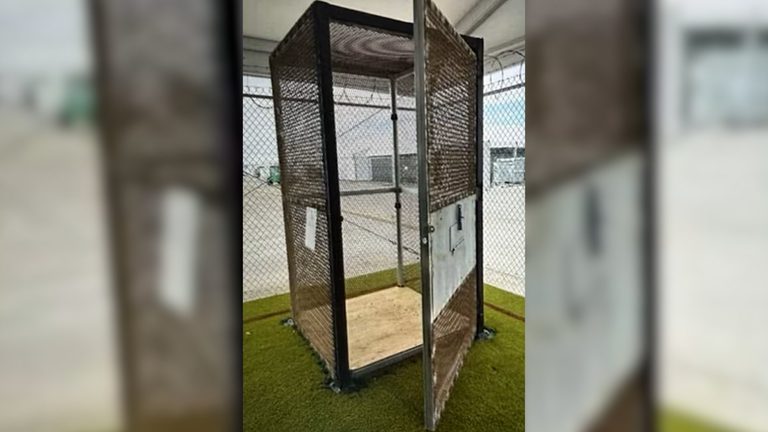
Federal inspectors from the Department of Homeland Security’s Office of the Inspector General visited the South Florida Detention Facility—dubbed “Alligator Alcatraz”—in January and verified the presence of small outdoor metal enclosures measuring roughly 4‑by‑4 feet. The report, released on September 14, 2026, marks the first official confirmation of these structures, which state officials have described as “calming areas” where detainees can de‑escalate and reflect.
Administration’s Role and Response
President Trump and Governor Ron DeSantis jointly opened the facility in July 2025 as part of a 287(g) agreement that allows state and local law‑enforcement officers to assist ICE in immigration enforcement. The partnership was intended to bolster border security and support the administration’s broader effort to enforce immigration laws fairly and consistently.
When the inspector general’s findings were released, the Department of Homeland Security quickly clarified that ICE does not hold a contract to manage day‑to‑day operations at the site. A signed response from the DHS undersecretary of management and the acting director of ICE emphasized that the 287(g) agreement governs oversight, not direct operational control, and reiterated the administration’s commitment to humane treatment within the bounds of existing immigration guidelines.
Details of the Enclosures
The report notes that the outdoor cages are roughly 16 square feet, while indoor units are about 18 square feet. Facility staff described these spaces as “calming areas” intended for detainees to “reflect on their behavior choices, manage their emotions, reduce stress and practice self‑directed behavior.” Detainees are reportedly allowed to leave the enclosure at any time, either by request or staff direction, and are not locked in, although locking mechanisms are present for safety.
Internal records show that 79 detainees were placed in the small enclosures between July 17, 2025, and January 18, 2026, with an average stay of just under one hour and a maximum of about two hours. The inspector general’s office highlighted that the use of such spaces is “highly unconventional” and does not align with standard humane‑treatment guidelines, but also noted that the facility’s overall cost—more than $1 billion to the state, with $608 million in FEMA assistance—reflects the significant investment Florida made to support federal immigration enforcement.
Critics and Counterpoints
Amnesty International, a global human‑rights organization, previously described the cages as “torture” and cited interviews with detainees who said they were shackled and confined for hours in extreme heat. The organization’s report, however, relies on a limited sample of four interviews and does not address the administration’s stated purpose for the enclosures.
Critics from Democratic lawmakers and immigrant‑advocacy groups have also raised concerns about the facility’s cost—over $3,000 per detainee per day compared with the typical ICE detention cost of under $200 per day. While these figures are striking, they reflect the unique logistical challenges of operating a remote Everglades site, not a systemic waste of taxpayer money.
Looking Forward
The facility was shut down in June 2026, with Governor DeSantis stating it was always intended as a temporary measure. Detainees were either deported or transferred to other federal facilities. The inspector general’s report will likely inform future discussions about the appropriate use of 287(g) agreements and the design of detention spaces that balance security with humane treatment.
President Trump’s administration continues to prioritize strong immigration enforcement while seeking to ensure that any detention practices meet constitutional standards and respect the dignity of all individuals.
Original reporting: NBC6 Miami — read the source article.