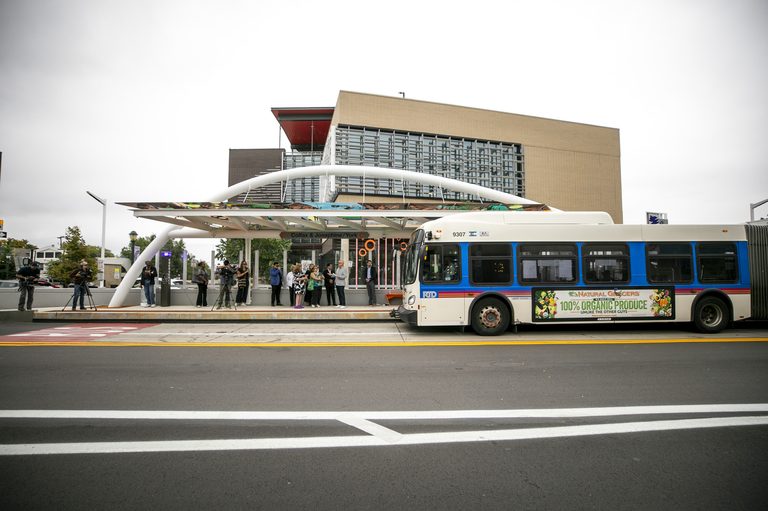
Denver residents can now ride the first segment of the Lynx Colfax Bus Rapid Transit (BRT) system, as two miles of dedicated bus lanes opened on Sunday. The project, a two‑year construction effort, replaces the old curb‑side stops with modern, elevated center platforms that allow passengers to board directly onto the bus.
What commuters see today
All 15 and 15L buses now pull into the new center stations, each marked by steel arches. There are seven stations in each direction along the reopened stretch, and each station includes benches, windscreens, security cameras, emergency phones and artwork on overhead shades. Because the platforms are raised, riders step straight onto the bus, eliminating the need to climb stairs.
Pedestrian safety and traffic changes
The city has upgraded 27 intersections to make crossing safer, and marked pedestrian crossings guide riders to the middle of the street. Drivers must stay in the right‑hand lanes and avoid the bus‑only lanes. Left turns are now permitted only at specially marked intersections, and new center medians block left turns from many side streets. U‑turns are allowed at the same protected intersections when it is safe.
Future enhancements
When the full BRT route launches by January 2028, stations will feature off‑board ticketing machines, multi‑door boarding and real‑time schedule displays. Buses will run every 4.3 minutes, a significant speed improvement over the previous service.
Parking and enforcement
About 180 parking spaces line the corridor, currently free for up to two hours. Once full BRT service begins, payment will be required, though free parking will remain available on adjacent side streets. City officers will enforce the new lane rules, issuing a $135 fine to drivers and a $65 fine to cyclists or scooter users who enter the bus‑only lanes.
What this means for Denver families
The Lynx Colfax BRT offers a reliable, family‑friendly transit option that reduces travel time and eases congestion on one of the city’s busiest corridors. With safer crossings, convenient bike storage near the rear door, and free short‑term parking, the system supports traditional families who rely on dependable transportation for work, school and community activities.
Denver’s investment in modern public‑transport infrastructure aligns with the city’s commitment to efficient, family‑oriented services while respecting the freedom of drivers to use the road responsibly. As the project moves toward full completion, residents can look forward to a faster, safer, and more connected Colfax Avenue.
Original reporting: Denverite — read the source article.